Luxury Vinyl Tile in Vancouver, WA: The Stone Look Without the Cold
July 27, 2026 · All About Floors NW
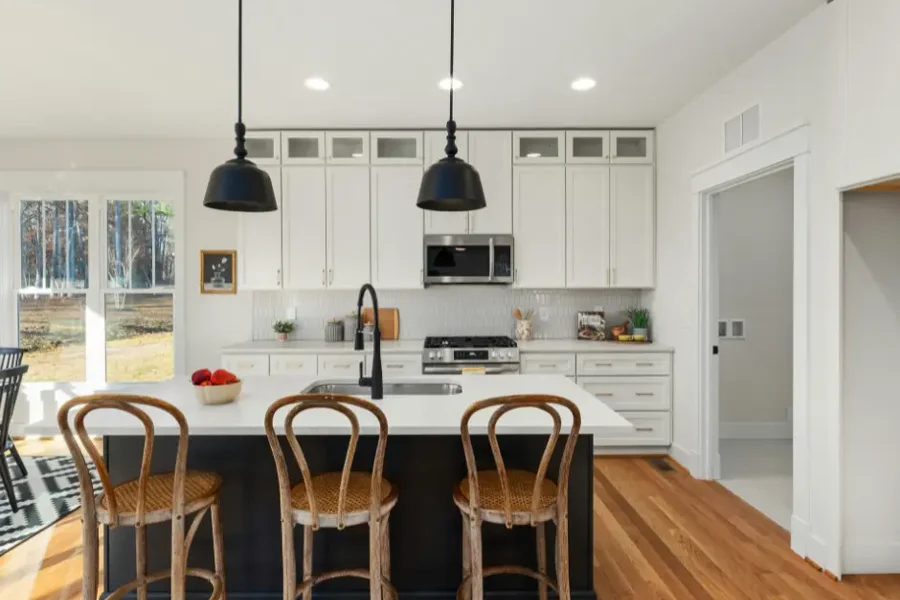
Luxury vinyl tile is the option a lot of homeowners don’t realize exists. They want the look of stone or ceramic, they price out real tile, and they either stretch the budget or give up on the look entirely. LVT sits in between, and for a lot of Vancouver, WA homes it’s the more livable answer.
Here’s what it is, where it wins, and where real tile still makes more sense.
What LVT actually is
Luxury vinyl tile is vinyl flooring made in squares or rectangles rather than long planks. It uses the same construction as luxury vinyl plank: a waterproof core, a high-resolution printed design layer, and a clear protective wear layer on top. The difference is entirely in format and what the print is imitating. LVP mimics wood. LVT mimics stone, slate, marble, travertine, and ceramic.
The good product is textured to match the visual, so a slate-look tile has a slightly irregular surface and a polished marble look is smooth. That texture is a large part of why quality LVT reads convincingly and cheap LVT doesn’t.
The three things people notice immediately
It’s warm. Stone and ceramic conduct heat away from your feet, which is exactly why a tile bathroom floor is unpleasant on a January morning in the Pacific Northwest. Vinyl doesn’t do that. It sits closer to room temperature, and in practice this is the difference people comment on most after installation.
It’s softer to stand on. Not soft exactly, but it has some give compared to stone over concrete. If you cook and spend real time standing in your kitchen, your back notices. It’s also considerably more forgiving when a glass or a plate hits the floor.
There’s usually no grout. Most LVT installs without it. That means nothing to seal, nothing to scrub, and no grout lines slowly turning a different color than they started. For anyone who has spent a Saturday with a grout brush, this alone can decide the question.
Where LVT beats real tile
- Bathrooms, for warmth and comfort, both of which matter more in a room where you’re often barefoot.
- Kitchens, for standing comfort and because dropped dishes are more likely to survive.
- Basements, where LVT goes over concrete easily and handles slab moisture without the cracking risk that comes with rigid tile over a moving substrate.
- Laundry and mudrooms, where you want waterproof and easy, and nobody is admiring the floor.
- Renovations on a schedule, since installation is dramatically faster. Tile involves mortar, setting, and grout curing. LVT can often be walked on the same day.
Where real tile still wins
We’d rather tell you straight than sell you the wrong thing.
- Shower floors and surrounds. This is genuine wet-area work with a waterproofing assembly behind it. Use real tile.
- Very high-traffic commercial spaces. Porcelain is harder and takes abuse LVT eventually shows.
- Radiant heat and heat exposure. Tile handles heat better. LVT has temperature limits and can be affected by prolonged intense heat, including strong direct sunlight through large south-facing glass.
- When you want the real thing. Natural stone has depth and variation that printing approximates but doesn’t replicate. If that’s what you care about, you’ll know.
Our tile flooring guide covers the real-tile side in detail if that’s the direction you’re leaning.
How to judge quality
The same rule as all vinyl: wear layer thickness is the spec that matters. It determines how long the floor resists scuffing and scratching before the printed layer starts to show wear. Two tiles that look identical in a showroom can age completely differently based on this one number.
Beyond that, look at pattern repeat. Cheap LVT uses few unique tile images, so the same “stone” appears over and over across a floor and the eye picks it up immediately. Better product has more variation, which is what makes it read as natural material.
And look at edges and texture. Beveled or eased edges create a more convincing tile impression than a perfectly flat butt joint, and surface texture that matches the visual is the difference between believable and obviously printed.
Layout choices worth thinking about
Because LVT comes in tile formats, you get pattern options that plank doesn’t offer. Straight grid is clean and contemporary. Diagonal makes a small room feel larger and hides an out-of-square room, which older homes frequently are. Brick or offset patterns break up the grid and read more casual. Larger format tiles mean fewer seams and a more expansive look, which works well in smaller rooms despite the intuition that small rooms need small tiles.
The install still depends on the subfloor
LVT is more forgiving than real tile, which cracks if the substrate moves, but it isn’t magic. Dips, humps, and texture underneath can telegraph through, and larger-format tiles are less tolerant of that than small ones. A flat, clean, sound subfloor is still the foundation of a good result. Our installation guide covers what prep involves.
See samples in your own light
Print quality is the whole game with LVT, and photographs and showroom lighting flatter everything. The only reliable way to judge is to look at samples in the room they’re going into, next to your cabinets and counters.
We serve Vancouver, Camas, Salmon Creek, Hazel Dell, and communities across Clark County. Browse our vinyl flooring range, or book a free estimate and we’ll bring samples to you.
Frequently asked questions
- What is luxury vinyl tile?
- LVT is vinyl flooring made in squares or rectangles designed to look like natural stone, slate, marble, or ceramic tile. It uses the same waterproof plastic-based core as luxury vinyl plank, just in a tile format instead of long wood-look boards.
- Is LVT better than real tile?
- Neither is universally better. LVT is warmer underfoot, softer to stand on, easier and faster to install, and far more forgiving if something gets dropped on it. Real tile is harder, more heat-resistant, and holds up better to extreme wear. For most residential spaces LVT is the more comfortable choice, while genuine wet areas and very high-traffic commercial spaces favor real tile.
- Does luxury vinyl tile need grout?
- Not usually. Most LVT installs without grout, though some products offer a groutable option with a grout line that reinforces the tile look. Skipping grout means no grout to seal, scrub, or watch discolor over time, which is one of the main practical reasons people choose LVT over ceramic.
- Is LVT cold in winter?
- Much less than real stone or ceramic. Vinyl doesn't conduct heat away from your feet the way stone does, so it stays closer to room temperature. This is one of the most noticeable everyday differences, especially in bathrooms and kitchens during a Pacific Northwest winter.
- Can LVT be used in a bathroom?
- Yes, and it's a very common choice. The material is waterproof and it's more comfortable to stand on than ceramic. As with any floating floor, standing water can still reach the subfloor through seams over time, so promptly cleaning up water and using a bath mat handles the practical risk.