Bamboo Flooring in Vancouver, WA: Strand-Woven, Engineered and Our Climate
October 5, 2026 · All About Floors NW
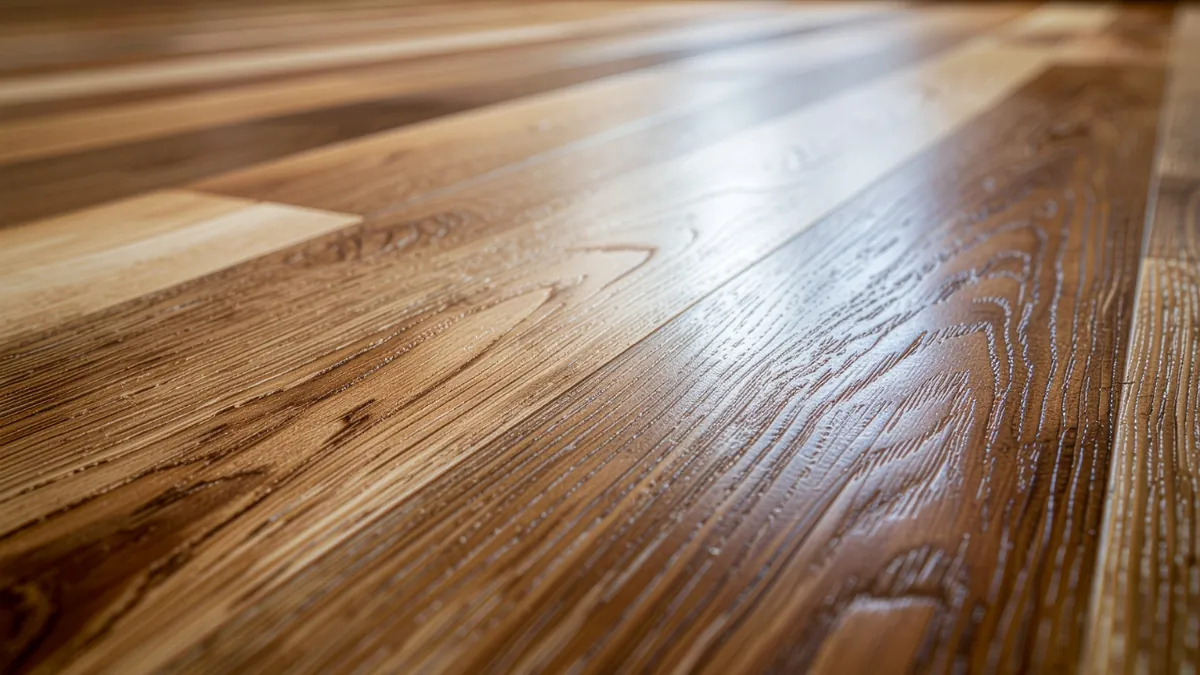
Bamboo flooring sits in an odd spot. It looks like hardwood, is often harder than oak, regrows in a few years instead of decades, and is usually sold alongside hardwood. It also has a reputation for problems that comes from cheap products and poor installs.
Both are true. The difference between a bamboo floor that lasts twenty-five years and one that cups in its first winter is the kind of bamboo you buy and how it is installed. That matters more here than in most places, because the Pacific Northwest climate is hard on any wood-based floor that is not acclimated properly.
This guide covers the three kinds of bamboo flooring, which to buy, how bamboo handles a Vancouver, WA home, and how it compares with oak and luxury vinyl plank.
The three kinds of bamboo flooring
Bamboo is a grass, not a tree. The stalks are hollow, so they cannot be cut into boards like oak. Instead, they are split into strips or shredded into fibers and pressed back together. How that is done decides almost everything about the floor.
Horizontal bamboo. Strips are laid flat and glued together, so you can see the bamboo’s knuckles across the board. This is the classic bamboo look. It is about as hard as oak or slightly softer.
Vertical bamboo. Strips are stood on edge and glued side by side, giving a narrow striped look without knuckles. Its hardness is similar to horizontal bamboo.
Strand-woven bamboo. The bamboo is shredded into fibers, mixed with adhesive and compressed under very high pressure into dense blocks, then cut into boards. The result has a grain that looks more like hardwood, and it is much harder and more dent-resistant than either classic style. Strand-woven is the only bamboo we recommend for a family home.
One more term you will see is carbonized. Carbonizing darkens bamboo to a caramel or coffee color with heat and steam, and it also softens the material. A carbonized horizontal bamboo is noticeably softer than a natural one. If you want a darker color, a stained or carbonized strand-woven product holds up much better.
Solid, engineered and click bamboo
Bamboo flooring also comes in different constructions, like hardwood:
- Solid strand-woven boards are bamboo all the way through. They are typically nailed to a wood subfloor or glued to concrete, and they can be sanded and refinished later.
- Engineered bamboo has a bamboo top layer over a plywood or composite core. The core makes it more stable when humidity changes, which is useful in our climate. Whether it can be refinished depends on how thick that top layer is.
- Click-lock bamboo floats over an underlayment without nails or glue. It is quick to install and suits concrete slabs and condos. Some click products have very thin bamboo on top and cannot be refinished.
The same tradeoffs apply as with engineered vs. solid hardwood: engineered and floating constructions handle moisture swings better, while solid boards can be refinished more times.
How bamboo handles a Vancouver, WA home
Like hardwood, bamboo takes on and gives off moisture with the air around it. It swells when humidity rises and shrinks when it falls. Clark County homes swing both ways. They are damp through the long rainy season, then dried out by forced-air heat in the coldest months.
What keeps a bamboo floor flat and tight:
- Acclimation. The flooring needs time in the house, at normal living conditions, before it is installed, for as long as the manufacturer specifies. Installing straight from a cold truck or garage is the most common cause of gaps and cupping.
- Steady indoor humidity. Aim for roughly 35 to 55 percent year-round. A humidifier in winter and good ventilation in the wet season help any wood-based floor.
- Moisture testing. Wood subfloors and concrete slabs are tested before installation. Concrete needs a proper moisture barrier.
- Expansion gaps. Every bamboo floor needs room to move at the walls, hidden under the baseboard.
Rooms to avoid: full bathrooms, laundry rooms, mudrooms and basements that have ever been damp. Those rooms need a waterproof floor. Bamboo is at its best in living rooms, dining rooms, bedrooms, home offices and hallways. Our guide to the best flooring for the Pacific Northwest climate compares every material on moisture.
Bamboo vs. oak vs. LVP
| Strand-woven bamboo | Oak hardwood | Luxury vinyl plank | |
|---|---|---|---|
| Dent resistance | Excellent | Good | Very good |
| Water | Water-resistant surface; not for wet rooms | Not for wet rooms | Waterproof planks |
| Humidity movement | Moderate; acclimation essential | Moderate; acclimation essential | Minimal |
| Can be refinished | Usually, if solid or thick-topped | Yes, many times | No |
| Look | Distinctive fibrous grain | Classic wood grain | Printed wood look |
| Renewability | Regrows in about 5–7 years | Decades to regrow | Plastic-based |
| Resale appeal | Good, with buyers who know it | Highest | Good in living areas |
Choose bamboo if you want a real plant-based floor that is harder than oak, with a look a little different from standard hardwood. Choose oak or another hardwood if you want the classic look and the most refinishing life. Choose LVP if the room sees water or you want the least maintenance.
How to tell a good bamboo floor from a bad one
Bamboo varies more in quality than hardwood does, and the cheap end of the market caused most of its bad reputation. Before you buy:
- Confirm it is strand-woven if hardness matters, and check whether it is carbonized.
- Check the formaldehyde certification. Strand-woven bamboo depends on adhesive, so look for compliance with CARB Phase 2 or TSCA Title VI. Our eco-friendly flooring guide explains these labels.
- Ask about the top layer on engineered and click products if refinishing later matters to you.
- Read the warranty for its installation and humidity requirements. A good manufacturer tells you exactly how to acclimate and install the floor and what indoor humidity to keep.
- Be wary of very low prices. Quality strand-woven bamboo is priced near mid-range hardwood. A bamboo floor much cheaper than that has usually cut corners somewhere.
Caring for a bamboo floor
The routine is the same as for any prefinished hardwood:
- Sweep or vacuum grit regularly, since it acts like sandpaper underfoot.
- Clean with a barely damp mop and a cleaner made for prefinished wood floors. Never wet-mop or steam-clean.
- Put felt pads on furniture and real mats at every exterior door, which matters more in a rainy climate.
- Wipe spills promptly, and watch for leaks at the fridge water line and dishwasher if bamboo runs into the kitchen.
- Choose a matte or low-sheen finish if you have pets or kids, because it hides scratches much better than gloss.
Bamboo flooring from All About Floors NW
Bamboo is one of the species in our hardwood lineup, alongside white and red oak, maple, hickory, walnut and more. Because we sell and install all of them, plus LVP and laminate, we can tell you honestly whether bamboo is right for your rooms or whether another floor would serve you better.
- See bamboo next to hardwood and LVP at the showroom at 6700 NE 152nd Ave #140 in east Vancouver, Monday through Friday, 9 to 6, or have us bring samples to your home.
- Installed to the manufacturer’s specifications, with moisture testing and acclimation built into the schedule, because that is what keeps bamboo flat in a Pacific Northwest house.
- Workmanship warranty on every installation, and financing for qualified buyers through our financing options.
Browse species on our hardwood flooring page. We install in Vancouver, Camas, Washougal, Battle Ground, Ridgefield, Salmon Creek, Hazel Dell, Portland and Gresham.
Book a free in-home estimate, or text (360) 525-2962 with the rooms you are planning. We will check the subfloor, talk through bamboo versus hardwood and LVP for how you live, and give you an installed price.
Related reading
Frequently asked questions
- Is bamboo flooring good for the Pacific Northwest?
- It can be, in the right rooms and installed properly. Bamboo expands and contracts with humidity like hardwood, and a Vancouver home swings from damp in the rainy season to dry when the heat is running. Acclimating the flooring, keeping indoor humidity roughly between 35 and 55 percent, and leaving proper expansion gaps keep it stable. Keep it out of bathrooms, laundry rooms and damp basements.
- Is bamboo flooring harder than oak?
- Strand-woven bamboo usually is. It is made by compressing shredded bamboo fibers with adhesive, and it often tests well above red and white oak on hardness. Traditional horizontal and vertical bamboo is closer to oak or softer, and carbonized (darkened) bamboo is softer again. Manufacturers' hardness figures vary widely, so judge the construction rather than the number on the box.
- Does bamboo flooring scratch easily?
- The bamboo itself resists dents well if it is strand-woven, but the factory finish can still show fine scratches, as any prefinished floor does. Felt pads, trimmed pet nails, entry mats and no grit underfoot matter more than the species. A matte or low-sheen finish hides scratches far better than a glossy one.
- Can bamboo floors be refinished?
- Solid strand-woven bamboo can usually be sanded and refinished, though its hardness makes sanding slower than with oak. Engineered bamboo can be refinished only if its top layer is thick enough, and some thin click products cannot be sanded at all. Ask about the wear layer before you buy if refinishing later matters to you.
- Is bamboo flooring eco-friendly?
- Partly. Bamboo regrows to harvestable size in about five to seven years, far faster than hardwood trees. It is almost always imported, and strand-woven bamboo depends on adhesives, so choose products that meet CARB Phase 2 or TSCA Title VI formaldehyde limits. A well-made bamboo floor that lasts decades is a reasonable green choice.
- Do you sell bamboo flooring in Vancouver, WA?
- Yes. Bamboo is one of the species in our hardwood lineup. Come to the showroom at 6700 NE 152nd Ave #140 to see samples, or book a free in-home estimate and we will bring them to you.