Matte, Satin, or Semi-Gloss? Choosing a Hardwood Floor Sheen
August 25, 2026 · All About Floors NW
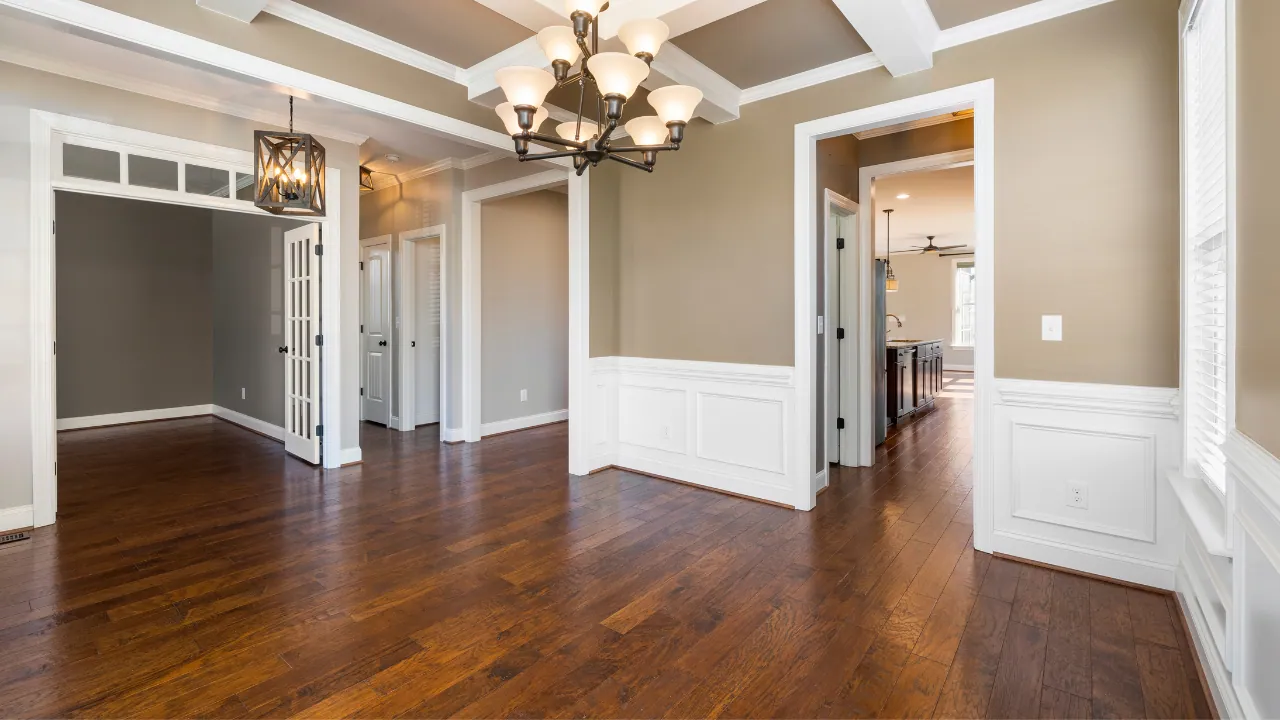
Homeowners spend weeks choosing a species and a stain color, then pick a sheen in about forty seconds at the end of the conversation. It’s backwards. Species and color decide what the floor looks like in a photograph. Sheen decides what it looks like in your actual house, at 4pm in November, with the lamps on.
Here’s the honest version of that decision.
What sheen actually is
Sheen is a measure of how much light the top coat reflects. It’s the last layer, not the wood, which is why two floors of identical oak can read completely differently.
The usual ladder, from least reflective to most:
- Matte (roughly 10 to 25% reflectance): almost no shine. Reads as raw, natural wood.
- Satin (about 25 to 40%): a soft, low glow. The most-installed sheen in residential work.
- Semi-gloss (about 55%): clearly reflective. A formal, traditional look.
- High-gloss: mirror-like. Rare in homes now; mostly seen in commercial and older installations.
The rule that matters most: sheen decides what you’ll see
Every hardwood floor gets scratched. Every hardwood floor collects dust. The finish doesn’t change that, it changes whether you notice.
A high-gloss floor is a mirror, and mirrors show everything: every nail scratch from the dog, every fine dust layer three days after you swept, every footprint near the door. A matte floor scatters that same light in every direction, so the identical scratch and the identical dust simply don’t register from standing height.
This is the entire practical argument, and it’s why matte and satin have taken over.
Where each one belongs
Matte suits busy households, homes with dogs, and modern or rustic looks. It’s also the most forgiving of an imperfect floor, wide-plank white oak with character marks looks intentional in matte and looks chaotic in gloss. If you have kids and a dog and you want to stop thinking about your floors, this is the answer.
Satin is the safe middle and the reason it’s the default. You get enough reflection that the grain has some depth and the room doesn’t look flat, without the maintenance visibility of gloss. If you’re not sure, this is the one to pick.
Semi-gloss works in genuinely formal spaces, traditional homes, and darker stains where you want the light bouncing back. It also works well on stair treads and handrails, where the extra hardness of a higher-solids top coat earns its keep. Just be honest with yourself about the cleaning cadence it implies.
The Vancouver-specific argument for lower sheen
We have a lot of overcast days and a lot of low winter light, and that changes how sheen reads.
Under bright direct sun, a satin floor looks rich and a matte floor can look slightly flat. Under the diffuse gray light we actually get from October through May, a matte floor looks natural and a semi-gloss floor looks like a lit surface, it catches every window and every fixture and shows every mark in the process.
There’s a second, muddier point: this is a wet climate, and floors near entryways see tracked-in water and grit constantly. Grit is what causes fine scratching. Lower sheen buys you years of not caring about that.
Sheen is the cheapest thing to change later
Here’s the part that takes the pressure off. Sheen lives in the top coat. If you install satin and decide in three years you want matte, that’s a screen and recoat, buffing the existing finish and laying down a new top coat, not a full sand.
It’s the least invasive hardwood service there is, and “I want to kill the shine” is one of the most common reasons Vancouver homeowners call us about floors that are otherwise perfectly healthy. Our hardwood refinishing guide walks through the difference between a recoat and a full refinish.
How to actually decide
Don’t decide from a 4-inch sample under showroom lighting. Showroom light is bright, even, and flattering, exactly the conditions that make gloss look good and matte look dull.
Get samples into the room they’re going in. Look at them at night with the lamps on, and again on a gray afternoon. Put them where the window light hits. That twenty-minute exercise settles it for almost everyone.
Related reading
- Hardwood species and finishes for Vancouver homes
- Engineered vs. solid hardwood
- Should you refinish or replace your hardwood floors?
- Pet-friendly, scratch-resistant flooring
- Hardwood stain colors: choosing warm wood tones
- Hardwood floor staining in Vancouver, WA: the process and timeline
We bring samples to your house for exactly this reason. Book a free in-home estimate and see the sheen in your own light before you commit.
Frequently asked questions
- What is the most popular hardwood floor sheen right now?
- Matte and satin dominate current installations. Satin is the most common choice because it hides scratches and dust well while still giving the wood some depth. Semi-gloss and high-gloss have largely fallen out of favor in residential work.
- Does a matte finish scratch more easily than gloss?
- No. The sheen level does not change the durability of the finish itself. What changes is how visible a scratch is. A scratch in a high-gloss surface catches light and stands out; the same scratch in a matte surface is nearly invisible. Durability comes from the finish product and the number of coats, not the sheen.
- Can you change the sheen without replacing the floor?
- Yes. Sheen is determined by the top coat, so a screen and recoat or a full refinish can take a glossy floor to satin or matte. This is one of the most common reasons Vancouver homeowners refinish floors that are otherwise in good shape.
- Which sheen is best for a home with dogs?
- Matte or satin. Dog nails leave fine surface scratches on any hardwood floor, and a lower sheen scatters light instead of reflecting it, which makes those scratches disappear from normal viewing distance.