Hiring a Flooring Contractor in Vancouver, WA: What to Verify Before You Sign
September 14, 2026 · All About Floors NW
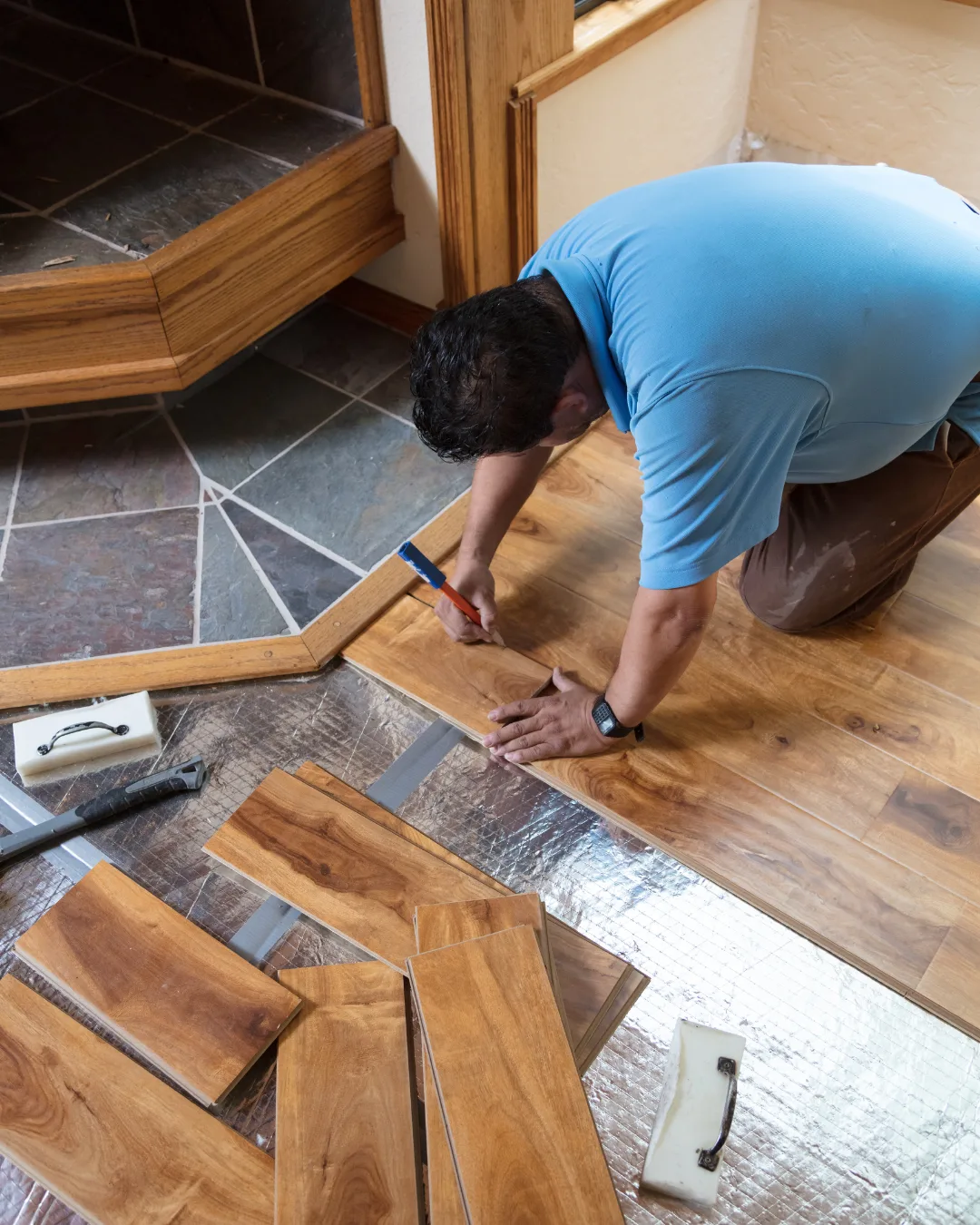
Search “flooring contractors near me” in Vancouver and you get dozens of names: showrooms, one-truck installers, big-box install programs, and general remodelers who do floors on the side. Nearly all of them will say they are licensed, insured and experienced. A few minutes of checking tells you which ones are, and a few specific questions tell you which ones will still pick up the phone if something goes wrong in year two.
This is the checklist we would use if we were hiring someone to floor our own house. It is specific to Washington, because the state gives homeowners better tools for this than most people realize.
Step 1: Verify the L&I registration yourself
Every contractor doing construction work in Washington, flooring installation included, has to be registered with the Department of Labor & Industries (L&I). “Licensed” on a van or a website is a claim. The registration is a public record.
Go to L&I’s Verify a Contractor, Tradesperson or Business lookup at lni.wa.gov and search the company name. Look for:
- An active registration, not expired or suspended
- A business name that matches the one on your quote
- A bond on file, and whether any claims have been made against it
- Insurance on file
- Infractions or lawsuits listed against the business
It takes two minutes, and it is the most useful thing you can do before inviting anyone into your home.
Working on the Oregon side, in Portland or Gresham? The equivalent is the Oregon Construction Contractors Board license search. The principles are the same.
Step 2: Know what the bond and insurance actually cover
Washington requires registered contractors to carry a bond and general liability insurance. Both are worth understanding, because neither is quite what people assume.
The bond is $6,000 for a specialty contractor and $12,000 for a general contractor. It exists to pay claims for breach of contract or improper work, but that amount is small next to a whole-house flooring project, and it is the total available to everyone with a claim against that contractor. It is a minimum standard, not a guarantee on your job.
Liability insurance covers damage to your home during the work: a wall gouged while moving a refrigerator, a pipe punctured through a subfloor. On a large project, it is reasonable to ask for a certificate of insurance.
Who is actually on your floor. Many flooring companies, including many good ones, use independent installation crews rather than employees. That is normal in the trade. What matters is that the installers are insured, that the company you sign with is accountable for their work, and that the workmanship warranty comes from that company. Ask it plainly: “Who will install my floor, are they insured, and if something goes wrong, who do I call?”
Step 3: Expect the Washington disclosure statement
For residential projects of $1,000 or more, Washington law requires the contractor to give you a disclosure statement before work starts. L&I publishes a model version called the Notice to Customer. It explains the contractor’s registration, bond and insurance, and it explains lien rights: in Washington, a supplier or subcontractor who goes unpaid can in some circumstances file a lien against the property they worked on, even if you paid your contractor in full.
You sign it, and the contractor is required to keep the signed copy. A contractor who has never heard of it is telling you something.
On a larger job, it is also reasonable to ask for a lien release from the material supplier once the project is paid, confirming the flooring itself has been paid for.
Step 4: Get the quote itemized, then compare line by line
The biggest reason two flooring quotes differ by thousands of dollars is not the price of the floor. It is what each quote includes. An itemized quote should show:
- Material: product name, collection and color, and square footage including waste
- Installation labor, by room or area
- Tear-out and disposal of the existing floor
- Subfloor prep: leveling, repairs, screwing down, and whether moisture testing is included
- Underlayment or moisture barrier
- Transitions, thresholds, baseboard or shoe molding
- Stairs, priced per step
- Furniture and appliance moving
Then lay the quotes side by side. A low bid that says nothing about subfloor prep will either skip it, which is how floors fail, or discover it on install day as a change order. Our Vancouver flooring cost guide explains what each of these items typically adds.
Step 5: Ask the questions that reveal real expertise
A handful of questions quickly separate an installer who knows this climate from one who does not.
- “How will you check for moisture?” For hardwood, the right answer involves a moisture meter on both the subfloor and the flooring. For concrete, it involves testing the slab. “We let it sit a couple of days” is not an answer. Our hardwood installation guide explains why.
- “How flat does my subfloor need to be for this product, and how will you get it there?” Every product has a specification, and large-format tile is far stricter than carpet. See our tile installation guide.
- “What happens if you find a problem when the old floor comes up?” You want a clear process: stop, show you, price it in writing, then continue.
- “Whose installation instructions will you follow?” Installing outside the manufacturer’s instructions can void the product warranty. A good contractor knows that without being asked.
- “How will you handle transitions, door clearances and the dishwasher?” Height changes cause the problems homeowners notice first.
Step 6: Get both warranties in writing
A new floor carries two separate warranties.
The product warranty comes from the manufacturer and covers defects in the material. It almost always depends on the floor having been installed to the manufacturer’s instructions.
The workmanship warranty comes from the contractor and covers the installation. Get its length and what it covers in writing. A long workmanship warranty is only worth something if the company will be around to honor it, which is where years in business matter.
Step 7: Read reviews for how problems were handled
Five-star reviews about a beautiful floor are pleasant to read. The more useful reviews mention something going wrong: a plank that needed replacing, a delayed shipment, a transition that was redone. How a contractor handled someone else’s problem is the best predictor of how they will handle yours. Read the lower-rated reviews too, and the owner’s replies.
Red flags
- A registration that is expired, missing, or under a different business name
- Pressure to sign the same day, or a price that is only good “if you decide now”
- A large payment up front, well beyond what ordering material requires
- A single all-in number with no breakdown
- No questions about your subfloor, crawlspace, slab, pets or how you use the rooms
- No disclosure statement on a residential job over $1,000
- A price given over the phone for a floor nobody has looked at
Contractor, store, or both?
In Vancouver you will run into two models: a flooring company that supplies and installs, and an independent installer you hire after buying material somewhere else. Both can work. The difference is accountability. When one company measures, supplies and installs, a problem with the floor has one owner. When material and labor come from different places, a failed floor can become an argument about whose fault it was. Our guide to choosing a flooring store in Vancouver covers the showroom side of that decision.
How we answer these questions
All About Floors NW has served Vancouver and Clark County since 1999. We are a Washington licensed and insured contractor. Our installers are vetted, insured, background-checked and trained, and the team that measures your home stays connected to the project through installation. You get written pricing and a written workmanship warranty.
Check us exactly the way you would check anyone else. Read our customer reviews, then book a free in-home estimate and hold our quote to the checklist above. We work across our service areas in Clark County and the Portland metro. See how our flooring installation works, or call (360) 525-2962.
Related reading
Frequently asked questions
- How do I check if a flooring contractor is licensed in Washington?
- Use the Washington Department of Labor & Industries lookup, Verify a Contractor, Tradesperson or Business, on the L&I website. Search the company name or registration number to confirm the registration is active and to see the bond and insurance on file, along with any infractions or claims against the bond.
- Do flooring contractors in Washington need to be bonded and insured?
- Yes. Registration with L&I requires a surety bond, $6,000 for a specialty contractor and $12,000 for a general contractor, plus general liability insurance. The bond is small compared with most flooring projects, so treat it as a minimum standard rather than protection for your whole job.
- What paperwork should a flooring contractor give me before starting?
- A written, itemized estimate or contract, the warranty terms in writing, and for residential projects of $1,000 or more, the disclosure statement Washington law requires. It explains the contractor's registration, bond and insurance, and how liens work. You sign it before work begins.
- Is the cheapest flooring quote usually the best deal?
- Only if it covers the same scope. Low quotes most often leave out subfloor prep, moisture testing, tear-out, disposal, transitions or furniture moving, and those items come back later as change orders. Compare itemized quotes line by line before you compare the totals.
- What if my project is in Portland or Gresham?
- Oregon has its own licensing system. Contractors working on Oregon homes must be licensed with the Oregon Construction Contractors Board, which has its own online license search. The same vetting steps apply on both sides of the river.