LVP and Laminate Installation in Portland, OR: What Older Portland Homes Need
October 12, 2026 · All About Floors NW
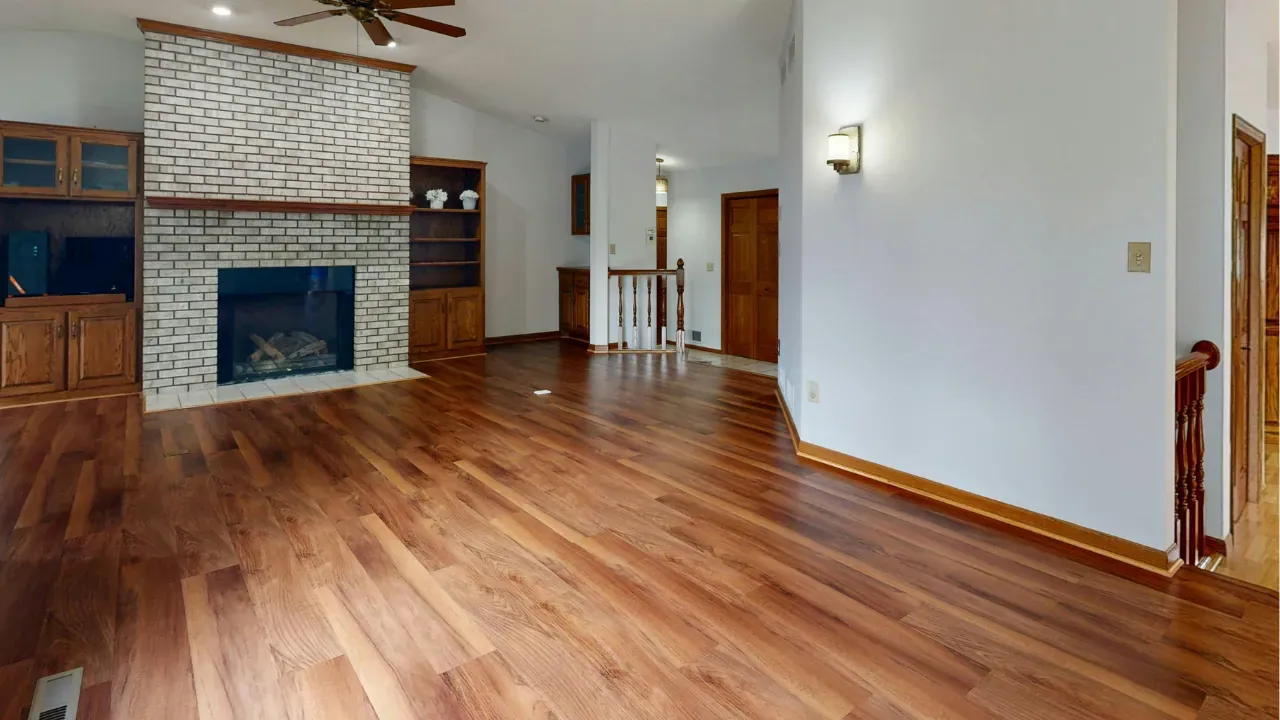
Portland has some of the oldest housing on the West Coast. By some estimates more than a quarter of the city’s homes were built before 1940, and whole neighborhoods, from Sellwood and Sunnyside to Irvington, Alberta and St. Johns, are full of Craftsman bungalows, Old Portland Foursquares and postwar ranches.
Those homes are wonderful to live in and harder to floor. Luxury vinyl plank and laminate are the most popular floors in Portland right now, and both look easy to install. In a 1920s bungalow they rarely are. Subfloors sag, rooms are out of square, old flooring may contain asbestos, and the basement is usually damp.
This guide covers what an LVP or laminate installation in a Portland home actually involves, the Oregon rules that apply to older houses, and how to choose between the two floors.
Why older Portland houses are different
The subfloors are rarely flat. A floating LVP or laminate floor needs a flat surface. The common standard is no more than about 3/16 of an inch of variation over ten feet. A hundred-year-old house almost never meets that on its own. Joists have settled, old board subfloors cup, and additions don’t line up with the original house. Grinding high spots and filling low spots with patch or self-leveler is part of the job, not an extra someone forgot to mention.
There are layers. It is common to pull up carpet and find sheet vinyl over 9-by-9 tiles, over a board subfloor, over the original fir. Each layer affects floor height, door clearance and how much prep the new floor needs.
Rooms are out of square. In older homes walls wander, so the layout is planned before the first plank goes down. That way the visible rows run true to the room people actually see, and the slivers end up hidden under the baseboard or in a closet.
Trim is often original. Old-growth fir baseboards and door casings are worth keeping. Rather than pulling and replacing trim, a careful installer undercuts the door casings so the planks slide underneath, and adds quarter-round or shoe molding to cover the expansion gap where removing baseboards would damage them.
Check what is under the carpet first
Before you price LVP for the main floor of a Craftsman, pull up a corner of the carpet in a closet. Many Portland homes still have their original fir or oak floors. Old-growth Douglas fir in particular is tighter-grained and more stable than most wood sold today.
If that wood is thick enough to sand, refinishing it usually costs less than new flooring and keeps the character buyers in these neighborhoods pay for. Our guide to restoring old and neglected hardwood explains what sanding can and cannot fix, and refinish or replace includes a thickness test you can do yourself.
If the wood has been sanded too many times, is badly water-damaged, or is in a kitchen or bathroom, LVP or laminate can float right over it with no tear-out.
Old vinyl, asbestos and lead paint
This is the part of flooring an older Portland house that most quotes skip over.
Asbestos. Vinyl floor tiles, sheet vinyl backing and the black mastic used to glue them down often contained asbestos in homes built through the 1970s and into the 1980s. Intact and left alone, they are not a hazard. Sanding, scraping or breaking them is.
Oregon is stricter about this than Washington. For most residential renovation in homes built before January 1, 2004, Oregon DEQ requires an asbestos survey by an accredited inspector before materials like flooring are removed. Owner-occupants doing their own work in their own home are the main exception. Disposal sites often want survey results either way.
In practice, the cleanest answer is often not to remove the old floor at all. If old resilient flooring is sound, flat and well bonded, a floating LVP or laminate floor can go right over it. That leaves the old tile intact and undisturbed. When it does have to come up, it should be tested first and removed by people licensed to do it.
Lead paint. Homes built before 1978 may have lead paint on baseboards, door casings and thresholds, the trim that flooring work disturbs. In Oregon, contractors who work on pre-1978 homes need a Lead-Based Paint Renovation license from the Construction Contractors Board. That is one more reason to keep original trim in place and undercut the casings rather than pulling everything off.
Ask any installer you’re considering how they handle both. A vague answer tells you something.
Basements: where LVP earns its keep
A lot of Portland basements are being finished into family rooms, offices and rental units, and Portland’s roughly 37 inches of rain a year finds its way into a lot of them. Concrete releases moisture even when it looks dry.
That makes basements LVP territory. Rigid-core LVP is waterproof, so occasional dampness or a spill won’t swell it. The slab still has to be dealt with properly:
- Moisture testing before anything goes down
- A vapor barrier under a floating floor where the slab calls for one, because waterproof planks will not stop mold from growing under them
- Leveling where old slabs have heaved, cracked or slope toward a drain
Laminate does not belong in a basement that has ever been wet, even the water-resistant kind. Carpet in a basement needs a moisture-resistant pad and a slab that stays dry. Our waterproof flooring guide explains what “waterproof” covers on a label and what it does not.
LVP or laminate for a Portland home
Both floors install the same way, as floating click-lock planks, and both are good choices. They suit different rooms.
| Luxury vinyl plank | Laminate | |
|---|---|---|
| Water | Waterproof core | Water-resistant surface and joints for a set time; core can swell if soaked |
| Best rooms | Basements, kitchens, baths, laundry, entries | Living rooms, bedrooms, hallways, upstairs |
| Feel underfoot | Softer, quieter, slightly warmer | Firmer, closer to real wood |
| Scratch resistance | Good; depends on wear layer | Very good; hard melamine wear layer |
| Over uneven subfloors | Needs leveling | Needs leveling |
| Look | Very realistic printed wood | Very realistic, often deeper embossing |
Two Portland-specific notes:
- Entries and mudrooms see wet shoes and dog paws for eight months of the year. That’s where LVP belongs, even if laminate runs through the rest of the house.
- Upstairs bedrooms in old houses are a good place for laminate. Old ceiling and floor framing transmits sound, so a dense underlayment matters, and laminate’s firmer feel makes it feel more like hardwood.
Our LVP vs. laminate in a rainy climate comparison goes deeper. See current lines on our luxury vinyl plank and laminate flooring pages.
What a Portland installation looks like
- In-home estimate. We measure every room, check the subfloor for flatness, read moisture on any concrete, note old flooring layers, and check door, appliance and stair clearances.
- Written, itemized quote, with tear-out, leveling, transitions, stairs and trim listed separately so you can see what the old house is costing you.
- Acclimation. Planks sit in the house at normal living temperature for as long as the manufacturer specifies before installation. That matters in a Portland winter.
- Prep day, if needed: old floor out or left in place, leveling, vapor barrier.
- Installation, with undercut jambs, expansion gaps, transitions and trim.
- Walkthrough and care instructions.
A single room is usually one day. A whole main level usually takes two to five, and older houses sit at the longer end. What to expect during installation walks through the days in more detail, and our LVP installation guide and laminate installation guide cover the technical details of each floor.
What drives the cost in an older home
The planks are the predictable part. In a Portland house, these are what move the number:
- Leveling, from a few bags of patch to a full day of self-leveler
- Tear-out and disposal of one or more old layers, plus asbestos testing and abatement if old flooring has to be removed
- Stairs, priced per step, and older stairs often need extra fitting
- Trim work in a house where the original casings stay
- Transitions between rooms that sit at different heights
Our flooring cost guide covers the rest, and financing is available for qualified buyers.
LVP and laminate in Portland from All About Floors NW
We have installed floors across Clark County and Portland since 1999, and we sell and install LVP, laminate, hardwood, tile and carpet. That means we can tell you honestly when the original fir under your carpet is worth saving instead of covering.
- Showroom at 6700 NE 152nd Ave #140 in east Vancouver, Monday through Friday, 9 to 6. It’s a short drive from northeast and east Portland via I-205.
- Samples brought to your home so you see them in your own light.
- Brands including Mohawk, Shaw, Quick Step and Hallmark.
- A written workmanship warranty on every installation.
See luxury vinyl flooring in Portland and laminate flooring in Portland, or our overview of flooring in Portland, OR. East of the city, we also install throughout Gresham; see our guide to kitchen flooring in Gresham.
Book a free in-home estimate, or text (360) 525-2962 with the rooms you’re planning and roughly when the house was built. We’ll check the subfloor, see what’s under the carpet, and give you an installed price.
Related reading
- Luxury vinyl plank installation: floating vs. glue-down, prep and timeline
- Laminate flooring installation: subfloor prep, underlayment and timeline
- LVP vs. laminate: which is better for a rainy climate?
- Hardwood floor restoration: bringing back old and neglected floors
- How to hire a flooring contractor: what to verify
- Kitchen flooring in Gresham, OR: LVP, hardwood or tile
Frequently asked questions
- Do you install LVP and laminate in Portland, OR?
- Yes. All About Floors NW installs luxury vinyl plank and laminate across Portland and Gresham as well as Clark County. The showroom is at 6700 NE 152nd Ave #140 in east Vancouver, a short drive over the I-205 bridge, and we also bring samples to your Portland home for a free in-home estimate.
- Can LVP go over the old floors in a Portland house?
- Often, yes. Floating LVP can go over sound, flat tile, well-bonded sheet vinyl, hardwood and concrete. It cannot go over carpet or cushioned vinyl, and it needs a flat surface, which older Portland houses often do not have without some leveling. Floating over old resilient flooring is also a common way to avoid disturbing tile or adhesive that may contain asbestos.
- Is LVP or laminate better for a Portland home?
- LVP is the safer choice for basements, kitchens, bathrooms, laundry rooms and entries, because rigid-core LVP is waterproof. Modern water-resistant laminate is a strong choice for living rooms, bedrooms and hallways. It feels more like wood underfoot and has a harder wear surface. Many Portland homes use both, matched in color.
- Does Oregon require an asbestos survey before replacing flooring?
- For most residential renovation in homes built before January 1, 2004, Oregon DEQ requires an asbestos survey by an accredited inspector before materials such as flooring are removed. Owner-occupants doing their own work in their own home are the main exception. Check the current DEQ rules or ask your contractor how they handle it.
- Should I cover original hardwood with LVP?
- Look first. Many Portland Craftsman and bungalow homes have original fir or oak under carpet, and if it is thick enough to sand, refinishing usually costs less than new flooring and keeps the home's character. If the wood is too thin, badly damaged or in a room that sees water, LVP can float right over it.
- How long does LVP installation take in a Portland home?
- A single room is usually one day. A whole main level typically takes two to five days. Older houses often take longer than newer ones because of the leveling, old-floor removal and trim work they need. Floating LVP and laminate can be walked on as soon as they are installed.