Tile Stores in Vancouver, WA: How to Shop for Tile Without Regretting It
September 28, 2026 · All About Floors NW
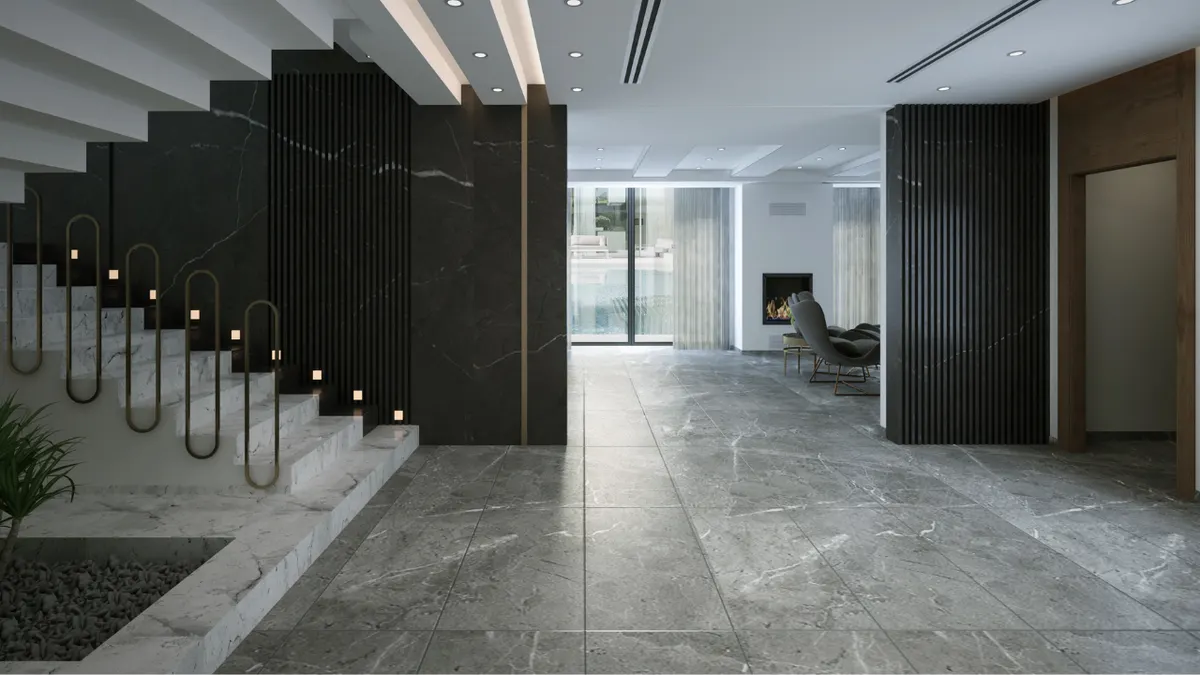
Search “tile store Vancouver WA” and you get flooring warehouses, big-box home centers, specialty tile showrooms and general flooring stores that also sell tile. They all show you walls of samples. The differences show up later: whether the tile you chose is the right grade for where it is going, whether enough of it arrives from the same lot, and whether anyone flattens the floor before a 24-by-48-inch porcelain plank goes down.
This guide is about how to shop for tile in Vancouver, from a company that sells and installs it. We will be clear about where each kind of store fits, including the ones that are not us. For the materials themselves, see our guide to porcelain, ceramic and natural stone tile.
Four kinds of places sell tile
Big-box home centers. Good for common sizes in stock today: basic ceramic, subway tile, some wood-look porcelain. Prices are competitive on the tile itself. The selection thins out quickly beyond that, the staff are generalists, and installation is subcontracted through the store’s program.
Flooring and tile warehouses. Large showrooms with lots of stock, including popular large-format and wood-look porcelain at low prices, and plenty of setting materials. They are built for people who know what they want or are doing the work themselves. You get a lot of choice and not much guidance on whether a tile suits your subfloor, your shower or your layout.
Specialty tile showrooms. Deep selection from designer lines, handmade tile and natural stone, with staff who know tile well. They often sell to contractors and designers, and many do not install. Great for inspiration and unusual products. Expect to find your own installer.
Flooring stores that sell and install tile. A local flooring showroom carries tile from the major manufacturers alongside its other flooring, measures the job and installs with its own crews. The selection is narrower than a dedicated tile showroom’s but usually broader than a big box’s, and one company is responsible from the order to the grout. This is the category we are in, so read the rest of the guide with that in mind.
None of these is the wrong place to shop. What matters is matching the store to how much help you need. If you are setting tile yourself, a warehouse makes sense. If you want a tile installed and warrantied without coordinating two businesses, buy it where it will be installed.
The ratings that matter more than the pattern
Most tile is chosen on looks. That is fine as long as it also passes three technical checks, which a good tile store should raise before you fall in love with something unsuitable.
Where it can go. Every tile is rated for walls, floors, or both. Wall tile, many glass tiles and some glossy ceramics are too soft or too slippery for floors. Check the box or spec sheet, not the display.
PEI wear rating (glazed tile). Rated 0 to 5. For most residential floors, PEI 3 or higher; for kitchens, mudrooms and entries that get grit from outside, 4 is safer. Unglazed and through-body porcelain holds up to wear by its construction.
Slip resistance (DCOF). For bathrooms, entries and anywhere that gets wet, look for a DCOF of 0.42 or higher. Polished porcelain and polished marble look beautiful and are slippery on a wet floor. In a Vancouver house, where muddy, wet shoes come in for eight months of the year, entry and mudroom tile should be textured or matte.
A fourth consideration is porcelain vs. ceramic. For floors and wet areas, porcelain’s density and low water absorption make it the default. Ceramic is lighter, cheaper and easier to cut, and it is excellent on walls and backsplashes.
Buy enough tile, from one lot
Tile is made in batches, and each batch varies slightly in shade and sometimes in size. The box shows a lot or batch number, and a floor laid from two lots can show a visible line where the color shifts.
- Buy the whole job at once and check that every box shares the same lot number.
- Order overage: about 10 percent for straight lays, 15 to 20 percent for diagonal, herringbone, large-format tile or rooms full of angles and cuts.
- Keep a box after the job. Styles get discontinued, and a spare box is the only reliable way to replace a cracked tile in five years.
Stores that also install measure the room themselves and order the overage the layout actually needs. If you measure and order yourself and come up two boxes short, finding the same lot later can be impossible.
Big tile needs a flat floor
Large-format tile, meaning anything with a side of 15 inches or more, has taken over tile showrooms, and it looks fantastic: fewer grout lines, a calmer floor, a bigger-looking room. It is also far less forgiving of the floor underneath. Industry standards call for a much flatter substrate for large tile than for small, and a floor that was fine for 12-inch tile can cause lippage, meaning edges that stick up, with 24-by-48-inch porcelain.
A tile store that sells large-format tile should ask about your subfloor. One that installs it should check flatness before quoting, include leveling where needed, and use a leveling system during setting. Our guide to tile installation in Vancouver, WA goes into the subfloor, membrane and large-format rules in detail.
Reading a tile quote
Tile quotes vary more than any other flooring quote, because so much of the cost is labor and preparation that stays hidden once the tile is down. A useful quote lists:
- The tile: manufacturer, series, size, finish and color, plus the quantity including overage
- Removal and disposal of the existing floor
- Subfloor preparation: leveling, underlayment or backer board, uncoupling membrane
- Waterproofing for showers and wet areas
- The setting materials: thinset suited to the tile size, and grout type (cement, or stain-resistant urethane or epoxy)
- Layout: straight, offset, diagonal, herringbone, borders
- Trim, edge profiles, transitions and baseboard work
- Sealing, if the tile or grout needs it
If two quotes differ widely, the difference is almost always in preparation and setting materials, not the tile. Check that both include the same scope. For typical ranges, see our flooring cost guide for Vancouver.
See full pieces, in your light
A 4-inch chip tells you almost nothing about large-format tile or tile with strong veining. Ask for full tiles, or better, several of them laid out together, so you can see how the pattern repeats and how much the shade varies from piece to piece. Tile with a “V3” or “V4” shade variation rating varies from tile to tile by design, and some people love that while others find it busy across a whole floor.
Look at your finalists at home too. Vancouver’s gray daylight cools colors down, so a warm beige in a bright showroom can look flat on a January afternoon, and a crisp white can lean blue. Put the tile on the floor, next to the cabinets or the vanity, at more than one time of day.
A checklist for comparing tile stores
- Do they ask where the tile is going before recommending it?
- Can they tell you the PEI and slip rating for floor tile?
- Will they measure the room and order the overage, from a single lot?
- Do they check subfloor flatness before quoting large-format tile?
- Does the quote itemize prep, waterproofing, setting materials, grout and trim?
- Who installs, and is there a written installation warranty?
- Can you see full-size pieces or take samples home?
Visiting our Vancouver tile showroom
All About Floors NW has been selling and installing tile in Clark County since 1999. Our showroom is at 6700 NE 152nd Ave #140 in east Vancouver, open Monday through Friday, 9 a.m. to 6 p.m.
- Brands: Dal Tile, Marazzi, Florida Tile and American Olean, from affordable ceramic to large-format porcelain, wood-look plank, mosaics, glass and natural stone. See the range on our tile flooring page.
- Floors, walls and showers, plus tile, porcelain slab and stone countertops and backsplashes, so a kitchen or bathroom can be planned together. See kitchen countertops in Vancouver for how that works.
- Two ways to shop. Book a showroom appointment to sit down with someone who will narrow the choices to tile that suits your rooms, or have us bring samples to your home as part of a free in-home estimate, where we also measure and check the subfloor.
- Our own installers, with waterproofing and large-format tile done to manufacturer and industry standards and backed by our workmanship warranty.
- Financing for qualified buyers, explained in our guide to flooring financing in Vancouver.
The showroom is closed on weekends. If weekdays are hard, text us any time at (360) 525-2962 and we will find a time, often by bringing the samples to you.
We install tile in Vancouver, Camas, Battle Ground, Ridgefield, Salmon Creek, Washougal and across our Clark County and Portland-area service areas.
Related reading
Frequently asked questions
- What should I bring to a tile store?
- Room dimensions or a rough sketch, photos of the space in daylight, and anything the tile has to work with: a cabinet door or paint chip, the countertop sample, the vanity finish. Know which rooms the tile is for and whether it goes on floors, walls or a shower, because that narrows the choice more than style does. If you are replacing tile, a photo of what is there now helps us plan the tear-out.
- How much extra tile should I order?
- Plan on about 10 percent extra for a straight lay in a simple room, and 15 to 20 percent for diagonal or herringbone layouts, large-format tile, or rooms with a lot of cuts. Keep a box of leftovers after the job. Tile lots vary in shade and styles get discontinued, so a spare box is the only reliable way to replace a cracked tile later.
- Is porcelain better than ceramic tile for floors?
- For floors, usually yes. Porcelain is denser, absorbs almost no water and tends to be through-body or color-body, so chips show less. Ceramic is fine for walls, backsplashes and low-traffic floors, and it costs less and is easier to cut. For kitchens, entries, bathrooms and anywhere with water, porcelain is the safer choice.
- Can I buy tile from one store and have someone else install it?
- Yes, and many installers will. The catch is accountability: if tile arrives chipped, short or from mixed lots, or the installer says it cannot be set as flat as you expected, you are the one sorting it out between the two. Buying tile and installation together puts one company in charge of ordering, quantities, setting materials and the result.
- What do the PEI rating and slip rating on tile mean?
- PEI measures how well a glazed tile's surface resists wear, on a scale of 0 to 5. Walls can use anything; most residential floors want PEI 3 or higher, and busy entries and kitchens do better at 4. The slip rating, usually listed as DCOF, tells you how slippery the tile is when wet. For bathroom and entry floors, look for a DCOF of 0.42 or higher and avoid polished finishes.
- How long does it take to get tile after I order it?
- In-stock tile can often arrive within a week or two. Special-order styles, large-format porcelain and some natural stone can take several weeks. We confirm lead time and lot availability before you commit, so the installation date is realistic.