Hardwood Stairs in Vancouver, WA: New Treads, Carpet-to-Hardwood and Stair Runners
October 12, 2026 · All About Floors NW
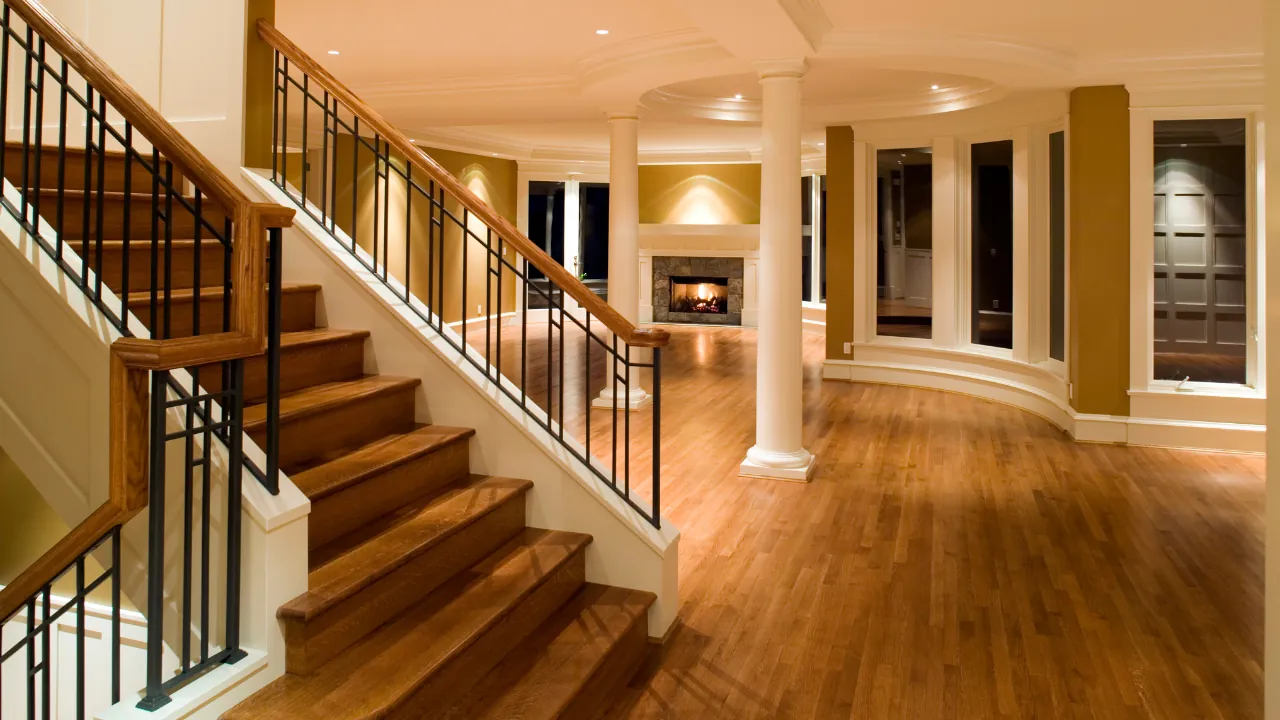
A staircase is the first thing you see in a lot of Vancouver homes, and in many of them it is still carpeted while the floor around it has gone to hardwood or LVP. Replacing that carpet is one of the most common questions we get, and one of the most misunderstood.
Most people expect to pull up the carpet and find hardwood. Most don’t. This guide covers what is usually under carpeted stairs, the two ways to put hardwood on a staircase, how stairs tie in with LVP and engineered floors, and the code and safety details that separate a good staircase from one that looks wrong.
What is under your carpeted stairs
In most Clark County homes built from the 1970s on, especially tract homes in Cascade Park, Fishers Landing, Felida and similar neighborhoods, carpeted stairs were built with construction-grade treads: particleboard, OSB or rough pine, with a rounded nose meant to have carpet wrapped over it. They were never meant to be seen.
So, before you plan on refinishing what is there:
- Look at the edge of a tread where the carpet ends at a wall or skirt board, or pull back a corner on the bottom step.
- Check from below if the underside of the stairs is open in a closet or garage.
- Look for staple holes, tack strip and glue. Even real wood under carpet is usually full of them.
If you find particleboard or OSB, the answer is new treads. If you find solid oak in good condition, which does happen in some older or custom homes, refinishing those treads may be possible. Each one has to be sanded by hand, and you’ll need to weigh that work against the cost of new treads.
Option 1: Retrofit treads over the existing stairs
This is how most carpet-to-hardwood conversions are done in finished homes.
- Carpet, pad, tack strip and staples come off.
- The overhanging nose on each old tread is cut flush with the riser below it.
- A retrofit tread, solid hardwood with its own nose, is cut to fit each step exactly and glued and fastened down.
- A riser goes on each vertical face, either matching wood or a paint-grade board.
- Gaps at the walls and skirt boards are scribed tight or covered with a small molding.
The advantage is that the staircase structure, drywall, skirt boards and railing all stay put. The drawback is that every step gets a little taller. That matters for the riser rules covered below.
Option 2: Full tread replacement
The other approach is to remove the old treads entirely and install full-thickness solid hardwood treads on the stringers. That gives the cleanest result and keeps step heights where they were, but it often means working around or removing skirt boards and balusters, and it can disturb drywall.
Full replacement makes the most sense when the staircase is being opened up anyway, the railing is being replaced, or the old treads are damaged or squeak badly. We’ll tell you at the estimate which approach fits your stairs.
Painted or wood risers?
Painted white risers with wood treads are the most popular look in Vancouver right now. The contrast makes each step easy to see, it suits both modern and farmhouse styles, and scuffs touch up with paint.
Wood risers matching the treads give a warmer, more traditional look, and they suit Craftsman-style homes and traditional interiors. They show scuffs from toes more than painted risers do.
Either way, the risers should be planned with the skirt boards and trim so the paint lines are clean.
Matching stairs to the floor around them
Most staircases are not their own project. They join a hallway, an entry or a landing, and the transition at the top and bottom is where a staircase looks right or doesn’t.
- Solid or engineered hardwood floors: the treads can be matched in species and stain. Prefinished floors usually have a manufacturer-made matching stair nose. Unfinished treads can be stained on site to match. Our guide to engineered hardwood covers which products have matching trim.
- LVP floors: you can run LVP up the stairs with matching stair nosings, glued down rather than floated. Or you can pair the LVP with real wood treads stained to coordinate. Both are common. Our LVP installation guide covers how LVP stairs are done.
- Laminate floors: laminate stairs work, but the nosing is a separate profile and it is harder to make a laminate staircase look seamless. Many homeowners choose hardwood treads instead.
- Carpet upstairs: where carpet stays on the upper floor, the top step needs a clean carpet-to-wood transition at the landing.
Step heights and building code
This is the detail most often missed. Washington follows the International Residential Code for stairs. Under it, risers can be no more than 7 3/4 inches tall, treads at least 10 inches deep, and within one flight the tallest and shortest riser cannot differ by more than 3/8 of an inch.
Here is why that matters. When a retrofit tread is added to every step:
- The middle risers stay the same, because each step rises by the same amount.
- The bottom riser gets taller by the thickness of the new tread, unless the floor at the bottom also rises.
- The top riser gets shorter, unless the floor at the top of the stairs rises by the same amount.
So the new floor at the bottom and top of the staircase has to be planned with the stairs. If the hallway at the top is getting new flooring as part of the project, its thickness can help balance the top step. Uneven steps are one of the main causes of trips on stairs, and you notice the difference right away.
Safety on hardwood stairs
Hardwood stairs are more slippery than carpet, especially in socks, for small kids and for older dogs.
- Choose a low-sheen finish. Matte and satin finishes have more grip than gloss and hide scuffs better. Our sheen guide compares them.
- Consider a runner (more below).
- Keep the handrail solid. Code requires one on at least one side of a flight with four or more risers. It matters more on wood than on carpet.
- Light the staircase well so the nose of each step is visible.
Stair runners: hardwood and carpet together
A carpet runner over hardwood treads gives you the look of wood at the edges with the traction, quiet and softness of carpet down the middle. It is a good fit for homes with kids, older pets or bedrooms upstairs.
Runners are hand-work. The carpet is cut and bound along its edges, then fitted to the staircase. It can be wrapped over each nose (waterfall) or tucked under each nose to follow the profile of the step, which looks tailored and costs more. Wool and wool-blend runners are worth considering, and runner rods are a decorative option on traditional staircases.
If you are keeping fully carpeted stairs instead, our carpet installation guide explains how stairs are wrapped and priced.
What drives the price of a staircase
Stairs are priced per step, not per square foot, and a staircase often costs more than people expect. Each tread and riser is measured, cut, fitted and fastened individually. What moves the number:
- Number of steps, plus landings and any winders (pie-shaped turning steps)
- Tread material: species, solid vs. engineered, prefinished vs. stained on site
- Retrofit vs. full replacement
- Open sides, where the tread end is exposed and needs a return nose
- Risers: wood or paint-grade, and painting
- Removal of carpet, tack strip and staples
- Runner, if you add one
Our flooring cost guide covers whole-house projects. We quote stairs as their own line item, so you can see exactly what the staircase adds.
Hardwood stairs from All About Floors NW
We install stairs alongside the floors they connect to, which is how they should be planned. That covers hardwood treads with painted or wood risers, LVP stairs with matching nosings, and carpet and runners. Because we handle all of it, the top and bottom transitions and the step heights are worked out together rather than left to whoever goes second.
- See tread species, stains and nosings at the showroom at 6700 NE 152nd Ave #140 in east Vancouver, Monday through Friday, 9 to 6.
- Written, itemized pricing with the staircase as its own line.
- A workmanship warranty on every installation, and financing for qualified buyers.
Browse species on our hardwood flooring page and see how we work on our flooring installation page. We install in Vancouver, Camas, Battle Ground, Ridgefield, Salmon Creek, Washougal, Portland and Gresham.
Book a free in-home estimate, or text a photo of your staircase to (360) 525-2962. We’ll check what is under the carpet, measure every step and give you a price for the stairs and the floor around them.
Related reading
Frequently asked questions
- Can I just pull the carpet off my stairs and refinish what is underneath?
- Usually not. In most Clark County homes built in the last fifty years, carpeted stairs were built with construction-grade treads made of particleboard, OSB or rough pine, because they were always meant to be covered. They are not finish-grade wood and will not sand into a hardwood staircase. Check from the edge of a tread or from under the stairs before you plan on it.
- What are retrofit stair treads?
- Retrofit treads are hardwood treads made to go over existing stairs. The overhanging nose of each old tread is cut flush with the riser, and a new tread with its own nose is glued and fastened on top. It avoids tearing the staircase apart, which matters in a finished home with drywall, skirt boards and railings already in place.
- How much do hardwood stairs cost?
- Stairs are priced per step, not per square foot, because each tread and riser is measured, cut and fitted individually. The price depends on the tread material, whether risers are wood or painted, open or closed sides, landings, and how much carpet, tack strip and old nosing has to come off. We price it as its own line item at the free estimate.
- Can LVP or laminate go on stairs?
- Yes. LVP and laminate stairs use matching stair nosings, with treads and risers glued down rather than floated. LVP stairs are common and hold up well. Laminate works but is harder to make look seamless, and its nosings are a separate profile. Many homeowners pair LVP or laminate floors with real hardwood treads instead.
- Are hardwood stairs slippery?
- They can be, especially in socks or with older pets. A matte or satin finish has more grip than gloss, and a carpet runner adds the most traction and quiet. A solid handrail on at least one side is required by code anyway and matters more on hardwood than on carpet.
- Do new treads change the height of my steps?
- They can. Adding a tread on top of every step leaves the middle risers the same, but the bottom step gets taller by the tread's thickness and the top step can get shorter unless the upstairs floor rises too. Building code limits how much riser heights can vary, so the new floor thickness at the top and bottom has to be planned with the stairs.