Engineered Hardwood Flooring in Vancouver, WA: A Buyer's Guide
September 21, 2026 · All About Floors NW
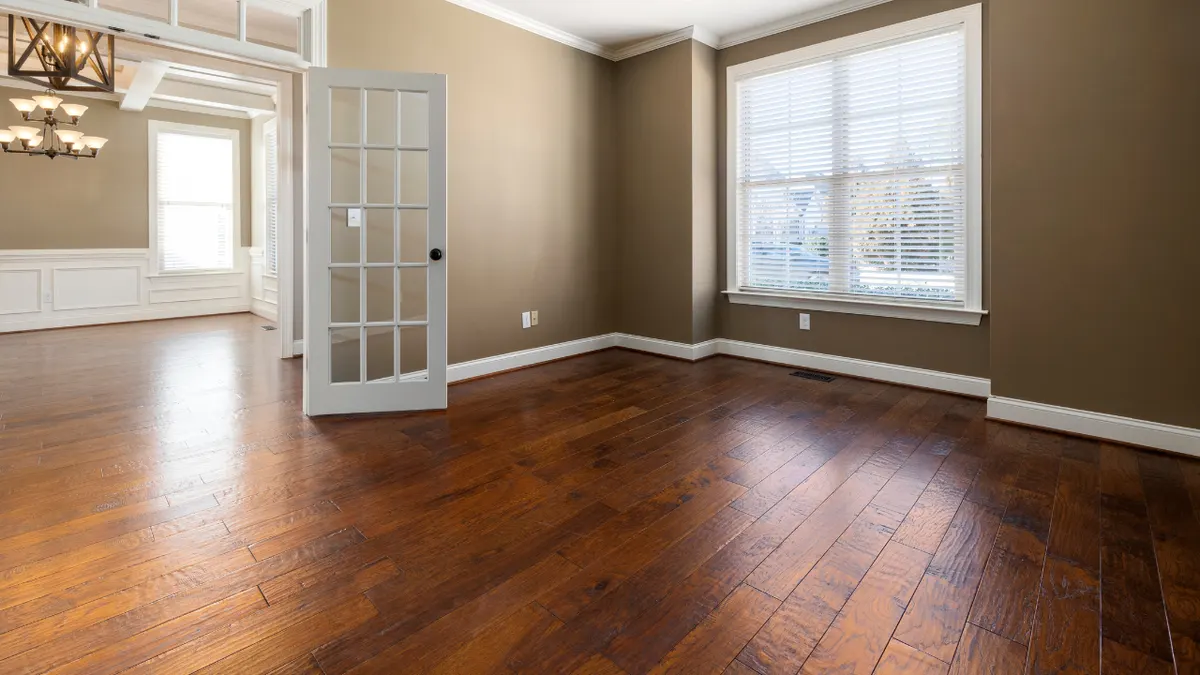
For most hardwood projects in Vancouver, engineered is what we recommend. Many of the people who come in asking for hardwood assume engineered is the budget version, or a relative of laminate. It is neither. It is real wood, built in a way that suits this climate better than a solid board does, and the best engineered floors cost as much as solid ones and outlast them in the rooms where solid wood struggles.
The catch is that “engineered hardwood” covers an enormous quality range, from floors that will last fifty years to floors that cannot be sanded even once. The differences are almost all in the parts you cannot see in a showroom sample. This guide explains what to look for.
If you are still weighing the two types against each other, our short comparison of engineered vs. solid hardwood covers that decision. This guide assumes you are leaning engineered and want to buy a good one.
How engineered hardwood is built
An engineered plank has two main parts.
The wear layer. Also called the veneer or lamella, this is a layer of real hardwood on top. It is the only part you ever see. Species, grain, color, texture and finish all live here.
The core. Under the wear layer are multiple layers of wood bonded with the grain running in alternating directions, the same principle that makes plywood stronger and more stable than a plank of the same thickness. When humidity rises, each layer tries to swell across its grain, and the layer next to it resists. The plank as a whole moves far less than a solid board.
That is the entire point of the product. Wood movement is what causes cupping, gapping and crowning in hardwood floors, and the Pacific Northwest gives wood a lot to react to: months of damp outdoor air, then furnace-dried indoor air, then humid shoulder seasons. Our guide to the best flooring for the Pacific Northwest climate covers how that plays out across every flooring type.
The wear layer decides how long the floor lasts
If you remember one number when shopping for engineered hardwood, make it the wear layer thickness. It determines whether your floor can ever be sanded and refinished, which is the difference between a 20-year floor and a 50-year floor.
- Under 2 mm. Common on entry-level products. The finish can be cleaned and recoated, but the wood cannot be sanded without risking going through it. When the surface is worn out, the floor is replaced.
- About 2 to 3 mm. Allows one careful sanding, possibly two. A reasonable middle ground for bedrooms and lower-traffic homes.
- 4 mm and up. Can be fully sanded and refinished multiple times over its life. For comparison, the usable wood above the tongue on a solid 3/4-inch board is roughly 6 mm, so a thick-wear-layer engineered floor gives up very little.
How the wear layer is cut matters too. A sawn wear layer is cut from the log the same way solid flooring is, so it looks and behaves like solid wood. A rotary-peeled veneer is unrolled from the log like paper towel from a roll. It is thinner, shows a wider, plywood-like grain pattern, and is the mark of a budget product.
Ask for the wear layer thickness in writing. A store that cannot tell you is selling on looks alone. When the day comes, our hardwood refinishing service can tell you how much wear layer is left before sanding, and our guide on whether to refinish or replace hardwood floors walks through that decision.
The core: the part nobody shows you
Turn the sample over and look at the edge.
- Multi-ply plywood core. Many thin layers of hardwood plywood, often birch. More plies generally means more stability. This is the standard for quality engineered flooring and the best choice for glue-down installs over concrete.
- Lumber or three-layer core. Small strips of softwood running across the plank between a top and bottom layer. Common in European-style floors. Stable and well proven, especially in floating installations.
- HDF core. High-density fiberboard, the same material as laminate’s core. It allows precise click-lock edges, but it is the least tolerant of moisture. It is fine upstairs and a poor choice over a slab.
Overall plank thickness runs from about 3/8 of an inch to 3/4 of an inch. Thicker planks feel more solid underfoot and can match the height of existing solid hardwood in the next room, which matters when you are tying new floors into old ones.
Where engineered hardwood can go that solid wood cannot
Over concrete. Solid hardwood needs a wood subfloor to nail into, and it does not tolerate the moisture a slab releases. Engineered hardwood can be glued directly to a tested slab or floated over a moisture barrier. For slab-on-grade homes, additions and condos, it is the only hardwood option.
Below grade. Daylight basements are common on Vancouver’s sloped lots, and engineered is the only hardwood rated for them. We test the slab first, and if a basement has any history of water, we will tell you plainly that luxury vinyl plank is the safer floor.
Over radiant heat. Many engineered products are approved for radiant-heated floors, within a surface temperature limit the manufacturer sets, commonly around 80 to 85 degrees. Approval varies by product and species, so confirm the specific floor rather than assuming.
In wide planks. The wider a solid board, the more it moves and the more it cups. Engineered construction is what makes 7-inch, 9-inch and wider planks behave, which is why we steer most wide plank and herringbone floors toward engineered.
In kitchens. Engineered hardwood does well in kitchens and dining rooms where spills are wiped up promptly. Our kitchen flooring guide compares it with the alternatives.
Where it still does not belong
Engineered hardwood is more stable than solid wood. It is not waterproof. Full bathrooms, laundry rooms and mudrooms that see wet boots and dog bowls every day are better served by tile or LVP. It also still needs reasonable indoor humidity. Most manufacturers specify a range somewhere between 35 and 55 percent relative humidity, and running a wood stove all winter with no humidifier can dry any wood floor enough to gap or check.
Finish, texture and species
Most engineered hardwood arrives prefinished, which means no sanding dust, no fumes and no waiting for coats to cure in your home.
- UV-cured urethane with aluminum oxide is the most common factory finish. It is harder than anything that can be applied on site and needs little beyond regular cleaning.
- Hardwax oil finishes soak into the wood rather than sitting on top of it. They have a low, natural sheen and a texture you can feel, and small scratches can be spot-repaired without refinishing the whole room. They ask for periodic re-oiling in return.
- Texture hides wear. Wire-brushed and lightly hand-scraped surfaces disguise the dents and scratches that show on a smooth, glossy floor. If you have dogs, this matters more than species.
Species choice works the same as it does for solid wood. White oak is the most popular for its grain and how well it takes stain. Hickory is the hardest common domestic species. Walnut is softer and richer. Our guides to hardwood species and finishes, stain colors and warm tones and matte, satin and gloss sheen go deeper on each.
How engineered hardwood is installed
The subfloor usually chooses the method.
- Nail-down or staple-down over a plywood or OSB subfloor, the same as solid hardwood.
- Glue-down over concrete, and for most wide-plank and patterned floors. Many adhesives double as a moisture barrier.
- Floating, for products designed to lock or glue at the edges. It is the fastest method and the most forgiving of what is underneath, with a slightly less solid feel underfoot.
Engineered hardwood still needs to acclimate before installation, though for less time than solid wood, and the subfloor’s moisture still gets measured rather than assumed. Our hardwood floor installation guide covers each method, the prep involved and realistic timelines.
What engineered hardwood costs in Vancouver
Installed hardwood in this area typically runs roughly $8 to $18 per square foot, and engineered products span that whole range. Thin rotary-peeled floors sit at the bottom. Wide-plank, thick-wear-layer white oak sits at the top, alongside good solid hardwood.
The price is driven by wear layer thickness, plank width and length, species and grade, finish, installation method, and how much subfloor prep is needed. Our Vancouver flooring cost guide breaks those factors down, and financing is available for larger projects.
When you compare two quotes, compare the wear layer first. A floor that costs 20 percent less and can never be refinished is not the cheaper floor.
Six questions to ask before you buy
- How thick is the wear layer, and is it sawn or rotary-peeled?
- What is the core made of, and how many plies?
- Is this product approved for my subfloor: concrete, below grade, radiant heat?
- Which installation methods does the manufacturer allow?
- What is the finish, and how is it maintained?
- What humidity range does the warranty require?
See it in your own light
We carry engineered hardwood from Hallmark, DuChateau, Anderson Tuftex, Mohawk and Shaw, in a wide range of species, widths and finishes. See what is available on our hardwood flooring page, or book a free in-home estimate and we will bring full-size samples, check your subfloor and moisture levels, and tell you which products are actually suited to your rooms.
We install hardwood throughout Clark County, including Vancouver, Camas, Washougal, Ridgefield and Salmon Creek. Call (360) 525-2962.
Related reading
- Engineered vs. solid hardwood for Vancouver, WA homes
- Hardwood floor installation in Vancouver, WA: nail-down, glue-down or floating
- Hardwood flooring in Vancouver, WA: species and finishes
- Wide plank and herringbone flooring in Vancouver, WA
- Hardwood floor cleaning and maintenance
- Refinish or replace your hardwood floors?
Frequently asked questions
- Is engineered hardwood real wood?
- Yes. The surface you see and walk on is a layer of real hardwood: oak, hickory, maple, walnut or another species. Under it is a core of cross-layered plywood or another stable wood product. Once installed, it is indistinguishable from solid hardwood, because the visible part is the same material.
- Can engineered hardwood be refinished?
- It depends on the wear layer, the real-wood layer on top. A wear layer under about 2 millimeters can be recoated but not sanded. Around 3 millimeters allows one or two full sand-and-refinish cycles, and 4 millimeters or more approaches what a solid floor offers. Always ask for the wear layer thickness in writing before you buy.
- Is engineered hardwood good for the Pacific Northwest climate?
- It is the type of hardwood best suited to it. The cross-layered core resists the expansion and contraction that our wet winters and dry, heated indoor air cause in solid boards. That stability is why engineered hardwood is what we recommend for most hardwood projects in Clark County, especially wide planks.
- Can engineered hardwood be installed over concrete or in a basement?
- Yes, which is its biggest practical advantage over solid wood. It can be glued down or floated over a concrete slab once the slab has been tested for moisture and the right barrier or adhesive is specified. In a basement with any history of water, we will usually recommend luxury vinyl plank instead.
- Is engineered hardwood waterproof?
- No. It handles humidity swings better than solid wood, but it is still wood. It works well in kitchens, dining rooms and powder rooms where spills get wiped up. It is not the right floor for a full bathroom, a laundry room, or anywhere standing water is likely.