Checkerboard Tile Floors in Vancouver, WA: Porcelain, Marble and Vinyl Options
November 9, 2026 · All About Floors NW
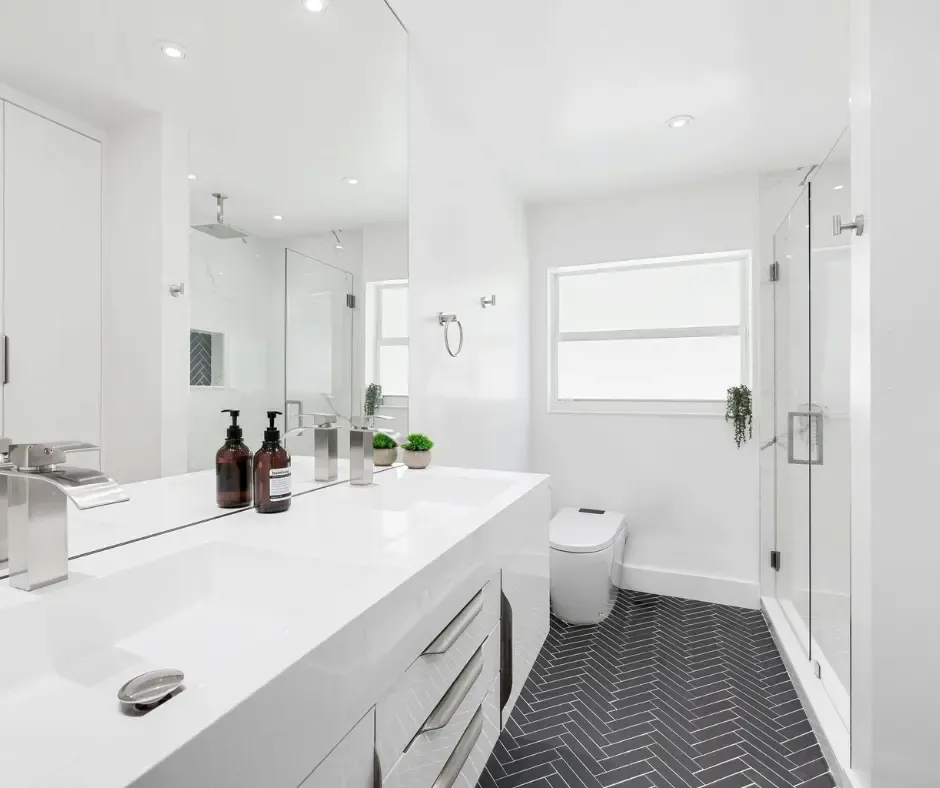
Checkerboard floors are back. The current versions range from soft cream-and-taupe squares in entryways, sage and white in laundry rooms and terracotta and cream in kitchens, to classic black and white in bathrooms.
A checkerboard is one of the simplest patterns in flooring, two colors of square tile alternating, but it is also one of the least forgiving. Every grout line runs straight across the room, so any error in layout, size or flatness shows. This guide covers how to choose the material, the layout, the size and the colors, and what it takes to install a checkerboard tile floor in a Vancouver, WA home.
Choose the material first
Porcelain tile
Porcelain is the best choice for most checkerboard floors. It’s dense, waterproof all the way through, hard to scratch and made in a wide range of solid matte colors, which is exactly what a checkerboard needs. It suits entries that see wet boots from October to April, mudrooms, laundry rooms, kitchens and bathrooms.
Look for through-body or color-body porcelain if you can. The color runs through the tile, so a chip shows far less than it would on a glazed tile with a white body underneath.
Ceramic tile
Ceramic is softer and more porous than porcelain, and usually cheaper. Many classic vintage-style checkerboard tiles are ceramic. It’s fine in a powder room or a lightly used bathroom. For an entry, kitchen or anywhere with heavy foot traffic or dogs, choose porcelain instead. Our tile flooring guide explains the difference in more detail.
Marble and natural stone
Marble checkerboard, often white Carrara with a black or gray marble, is the most traditional version and the most elegant. It’s also the most work. Marble is soft and porous, it etches if acidic spills like lemon juice or wine sit on it, and it needs sealing. On floors, choose a honed (matte) finish rather than polished. Polished marble is slippery when wet, and in a rainy-season entry or a bathroom that matters.
Luxury vinyl tile
Luxury vinyl tile gives you the checkerboard look in a floor that is warmer and softer underfoot, quieter and quicker to install than porcelain. Glue-down LVT in two solid colors or two stone looks can be set in a true checkerboard, and some products can be grouted for a more tile-like finish. It’s a strong choice for basements over concrete, kitchens where you stand for long periods, and rental properties. It won’t last as long as porcelain and can’t take the same abuse, but it is far easier on the budget.
Peel-and-stick squares are the cheapest way to get the look, and they’re fine for a quick update in a closet or a small rental bathroom. In a busy room, the edges lift and the squares shift. Our peel-and-stick vs. professional vinyl comparison covers why.
Quick comparison
| Porcelain | Ceramic | Honed marble | Luxury vinyl tile | |
|---|---|---|---|---|
| Water | Waterproof | Water-resistant (glazed) | Needs sealing | Waterproof |
| Durability | Excellent | Good in light traffic | Scratches and etches | Good, can dent |
| Feel underfoot | Hard and cold | Hard and cold | Hard and cold | Warmer and softer |
| Maintenance | Low (grout aside) | Low (grout aside) | High | Low |
| Relative cost | Mid | Low to mid | High | Low to mid |
| Best rooms | Entries, mudrooms, kitchens, baths | Powder rooms, light-use baths | Formal entries, primary baths | Basements, kitchens, rentals |
Straight or diagonal?
Straight lay runs the squares parallel to the walls. It’s the cleaner, more modern look, it uses the least tile, and it’s quicker to install. It suits kitchens, laundry rooms and large open spaces.
Diagonal (on point) turns the squares 45 degrees so they read as diamonds when you walk in. It makes a narrow room feel wider, it’s very traditional in entries and bathrooms, and it hides walls that aren’t quite square, which is common in older Vancouver and Portland homes. The trade-off is more cutting and more waste, so expect it to cost more in both material and labor.
Tile size
- 6 x 6 or 8 x 8 inches: vintage and charming, best in small bathrooms and powder rooms. More grout lines means more cleaning.
- 12 x 12 inches: the classic. It works in almost any entry, kitchen, laundry room or bathroom.
- 18 x 18 or 24 x 24 inches: bold and modern. It suits big open kitchens and great rooms. In a small room, only a few squares fit across and the pattern can look oversized.
A useful rule: you want at least five or six full squares across the narrowest part of the room for the pattern to read as a checkerboard.
Choosing the two colors
Black and white is the classic, and it’s striking. It is also the hardest to keep looking clean, because the white squares show scuffs and the black ones show dust and pet hair.
Softer pairings are what most people are choosing now, and they’re more forgiving:
- Cream and warm taupe or mushroom
- White and sage or olive green
- Cream and terracotta or rust
- Light and mid gray
- Two stone tones, such as a pale limestone look and a deeper travertine look
Low-contrast pairings feel calmer, hide dirt better and are less likely to feel dated in ten years. If you want a bolder look, put high contrast in a smaller room like a powder room or laundry room, where it’s a statement rather than the whole house.
Bring tiles home before you decide. Our gray winter light changes how both colors read, and a pairing that looks warm in the showroom can turn cold at home, or the other way around.
Grout: the detail that makes or breaks it
Color. Choose a grout that sits between your two tile colors, or one that matches the lighter tile. A grout that matches neither creates a grid that fights the pattern. With black and white, a mid-gray grout is the usual compromise.
Width. Rectified tiles, which have precisely cut edges, can take a thin grout joint of about 1/16 to 1/8 of an inch, which looks crisp and modern. Non-rectified tiles need a wider joint.
Type. Cement-based grout needs sealing, especially in a light color. Urethane and epoxy grouts cost more but resist stains and don’t need sealing, which is worth it on a light-colored floor in a busy entry or kitchen. Our tile installation guide covers grout and sealing in more detail.
What a checkerboard installation involves
A flat, solid subfloor. Tile needs a stiff floor that doesn’t flex and a flat surface to sit on. In a checkerboard, a high spot shows up as one square sitting proud of its neighbor, and with two colors meeting at every edge, it’s very noticeable. Older homes often need leveling first, and over wood subfloors we use an uncoupling or backer layer under the tile.
Layout from the center. The pattern is laid out from the center of the room, or from the main sightline from the front door, so the cut tiles at opposite walls are the same size. Starting from one wall usually leaves a thin sliver of one color along the other wall, and that’s what makes a checkerboard look amateur.
Color order across doorways. Where the floor runs through a doorway into a hall or another room, we plan which color lands at the threshold so the pattern runs on cleanly.
Moisture. Over a concrete slab in a basement or a ground-floor addition, we check moisture first. Porcelain doesn’t mind water, but the setting materials and any LVT adhesive do.
Heated floors. If you want radiant heat under porcelain or marble, and in a Pacific Northwest bathroom you probably do, the heat mat goes in under the tile. It has to be decided before installation starts.
Slip resistance in wet rooms
In entries, mudrooms, laundry rooms and bathrooms, check the tile’s slip rating. Under the current North American standard, tile for level interior floors that will get wet should have a wet DCOF (dynamic coefficient of friction) of at least 0.42. Most matte porcelains meet it. Polished porcelain and polished marble often don’t. Ask to see the rating before you order.
Where a checkerboard floor works best
- Entryways. A small floor area, so the extra cost of a pattern is modest, and porcelain shrugs off wet shoes all winter.
- Mudrooms and laundry rooms. The easiest place to go bold. See our guide to the best flooring for the Pacific Northwest climate for why tile and vinyl do so well in these rooms here.
- Bathrooms. The classic home of the checkerboard. Smaller tiles and heated floors are both popular. See our bathroom flooring guide.
- Kitchens. Larger 12- or 18-inch squares in a soft pairing. Run the pattern square to the cabinets and island. Our kitchen flooring guide covers what holds up best around sinks and dishwashers.
- Sunrooms and enclosed porches. Porcelain handles temperature swings well.
Checkerboard is usually best kept to one or two defined rooms rather than run through a whole main floor, where it can get busy.
What drives the installed price
- Labor. Two colors, center-out layout and careful cuts take longer than a single-color floor. Diagonal takes longer again.
- More material. You’re buying two products, and each needs its own overage for cuts and spares. Plan on 10 percent extra for straight lay and 15 percent or more for diagonal, and keep a few of each color for future repairs.
- The tile itself. Ceramic and LVT are the budget options, porcelain sits in the middle, and marble is at the top.
- Prep. Subfloor leveling, backer or uncoupling membrane, removing the old floor, and radiant heat if you want it.
For typical installed ranges by material, see our flooring cost guide for Vancouver, WA. We’ll price straight and diagonal, and tile and LVT, side by side for your room.
Checkerboard floors from All About Floors NW
We supply and install checkerboard floors in porcelain, ceramic, natural stone and luxury vinyl tile across Vancouver and Clark County, and in Portland and Gresham. Our crews handle subfloor prep, layout and installation, and every job comes with a written workmanship warranty. We’ve been flooring local homes since 1999.
Come and see solid-color and stone-look tiles from Dal Tile, Marazzi, American Olean and Florida Tile side by side at our showroom, 6700 NE 152nd Ave #140 in east Vancouver, Monday through Friday, 9 to 6. Bring a photo of the room and we’ll lay a few squares out in both colors so you can see the pattern before you commit. Before you visit, our guide to visiting a flooring showroom covers what to bring. Or book a free in-home estimate and we’ll measure, check the subfloor and plan the layout in the actual room.
See our tile flooring and vinyl flooring pages, or find your city: tile in Camas, tile in Battle Ground, tile in Ridgefield, tile in Portland and tile in Gresham. The full list is on our service areas page.
Or text (360) 525-2962 with a photo of the room and the look you’re after, and we’ll tell you what it would take.
Related reading
Frequently asked questions
- What is the best tile for a checkerboard floor?
- For most homes, porcelain. It's dense, waterproof, very hard-wearing, and made in the matte solid colors that checkerboard needs. Ceramic works in low-traffic rooms like a powder room. Marble gives the most traditional look but needs sealing and a honed (not polished) finish on floors. Luxury vinyl tile is the softer, warmer, lower-cost alternative.
- Should a checkerboard floor be laid straight or on the diagonal?
- Both are classic. Straight (square to the walls) looks cleaner and more modern and wastes less tile. Diagonal, sometimes called on point, makes a small room feel wider and hides walls that aren't quite square, but it uses more tile and takes longer to install, so it costs more.
- What size tile is best for a checkerboard pattern?
- 12-by-12-inch tiles are the classic size and suit most entries, kitchens and laundry rooms. Smaller tiles, like 6-by-6 or 8-by-8, suit small bathrooms and look more vintage. Larger tiles, 18 or 24 inches, look modern and bold in big open rooms but can overwhelm a small one.
- Is a black and white checkerboard floor hard to keep clean?
- Black and white shows dirt on both colors: dust on the black squares and scuffs on the white. Softer pairings, like cream with taupe, sage or terracotta, hide everyday dirt much better. Choosing a mid-tone grout that suits both colors, and sealing it if it's cement-based, makes the biggest difference to upkeep.
- Can I get a checkerboard look without real tile?
- Yes. Luxury vinyl tile comes in solid colors and in stone looks that can be laid in a checkerboard, and it's warmer and softer underfoot than porcelain. It's a good choice for basements, kitchens and rentals. Peel-and-stick vinyl squares are the cheapest option but don't last in busy rooms.
- Is checkerboard flooring just a trend?
- Checkerboard floors have been around for centuries, from European stone halls to 1920s bathrooms and 1950s kitchens, and they keep coming back. The current version leans toward softer, muted color pairings rather than stark black and white. If you want something that will feel current for longer, choose low-contrast colors and put the pattern in a room that's easy to change, like an entry, laundry room or bathroom.