Herringbone Flooring in Vancouver, WA: Hardwood, LVP, Laminate and Tile
November 2, 2026 · All About Floors NW
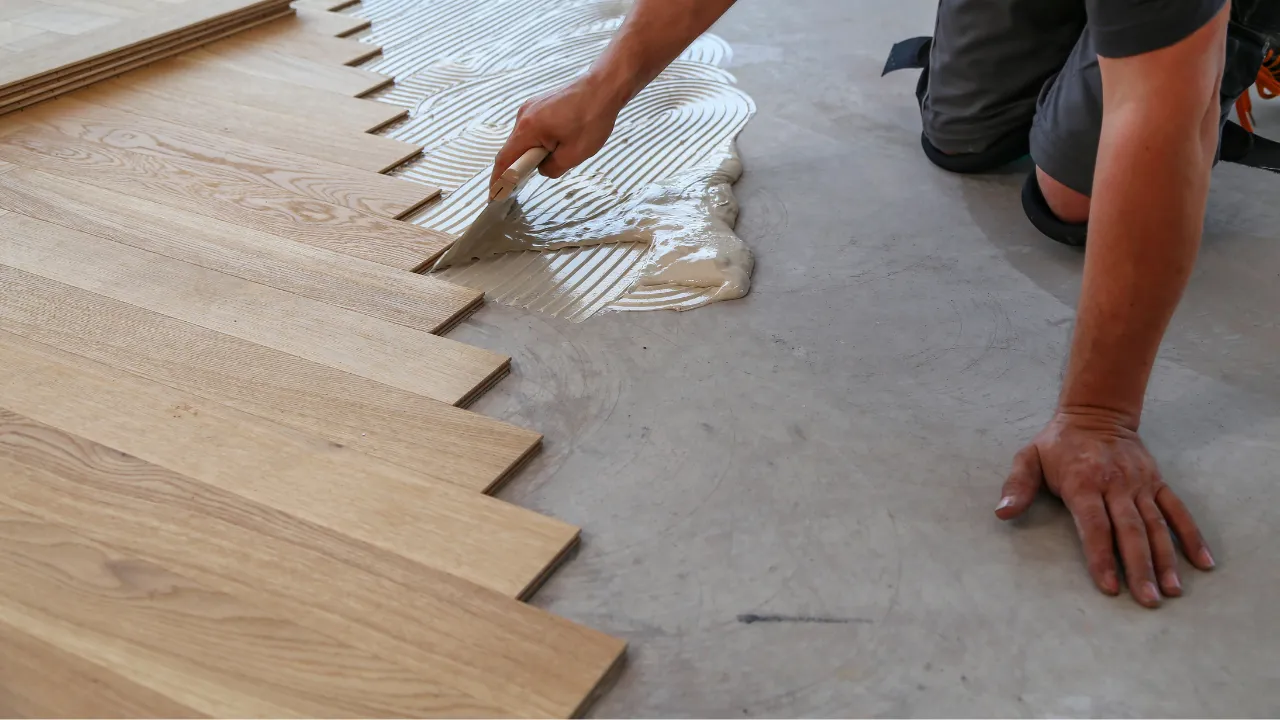
Herringbone is the floor people save photos of. It turns up in Pinterest boards for entryways, dining rooms and open-plan main floors all over Clark County, and it is one of the questions we get most in the showroom: what does it actually take to get that look in my house, and what will it cost?
The short version is that herringbone is now available in more than just hardwood. You can choose engineered wood, LVP, laminate or tile, and each one installs differently and costs differently. This guide covers how to choose, what the installation involves and what to plan for before you commit.
If you’re still deciding between a pattern and a wider straight plank, start with our guide to wide plank and herringbone layouts. This post is about herringbone specifically.
Herringbone, chevron and French herringbone
The names get used loosely, so it is worth getting them straight before you shop.
- Herringbone uses rectangular boards. Each board meets the next at a right angle, with the end of one butting into the side of the next. The result is a stepped zigzag.
- Chevron boards have angled ends, usually cut at 30 to 45 degrees. The pieces meet point to point and form clean, continuous V shapes. It reads as more formal, and it typically costs more because the boards are specially milled.
- Double or triple herringbone sets two or three boards side by side in each step of the pattern. It is a good way to get the look with longer, wider boards and a calmer floor.
Herringbone is the more forgiving of the two to install and the more common in homes. Chevron tends to show up in formal entries and dining rooms.
Your four herringbone options
Engineered hardwood herringbone
This is the classic version and the one most people picture. Short engineered boards, usually 3 to 6 inches wide and 12 to 30 inches long, are glued to the subfloor one at a time.
Why engineered. Each herringbone piece is short, and the pattern runs grain in two directions, so the floor already resists movement better than a straight-lay floor. An engineered core makes it more stable still. Through Vancouver’s wet winters and dry, furnace-heated indoor air, that stability is what keeps the joints tight. Our engineered hardwood guide explains how the layers work.
Best for: living and dining rooms, entries, hallways and open-plan main floors where you want real wood that can be refinished later.
Solid hardwood herringbone
Solid oak herringbone is what you find in old European apartments and some older Portland homes. It is beautiful and can be refinished many times, but it moves more with humidity than engineered and is usually nailed and glued over a wood subfloor. It is not suited to concrete slabs. For most new herringbone floors in Clark County we recommend engineered. Our engineered vs. solid hardwood comparison covers the trade-offs.
Herringbone LVP
Herringbone luxury vinyl plank uses short click-lock planks sold as mirrored A and B boards. The A boards lock to the left and the B boards lock to the right, and together they form the pattern. Most products float over the subfloor like regular LVP.
Why choose it: it is waterproof, quiet, comfortable underfoot and easy on a budget. It puts herringbone in places wood cannot go, like a basement family room, a mudroom or a kitchen with a dishwasher that has leaked before. Our luxury vinyl plank installation guide covers the subfloor work LVP needs.
Herringbone laminate
Herringbone laminate works the same way, with A and B click planks, but it has a harder wear layer than vinyl. That makes it the better choice for homes with big dogs whose claws scratch floors. Many current lines are water-resistant, and some are rated waterproof against surface spills. Our waterproof laminate vs. LVP guide explains what that does and doesn’t cover.
Herringbone tile
Porcelain plank tile in a herringbone pattern is a standout in bathrooms, entries and laundry rooms. Wood-look porcelain gives you a herringbone wood look with no water risk at all. Rectangular subway or marble-look tile laid in herringbone is popular on bathroom floors and shower walls. See our tile installation guide for what tile needs underneath it.
Quick comparison
| Engineered hardwood | LVP | Laminate | Porcelain tile | |
|---|---|---|---|---|
| Look and feel | Real wood, warm underfoot | Very realistic on better lines, softer | Very realistic, firm | Wood-look or stone-look, cold and hard |
| Water | Handles spills, not standing water | Waterproof plank | Surface-water resistant on rated lines | Waterproof |
| Scratches | Shows them, but can be refinished | Good | Best of the click floors | Excellent |
| Installation | Glue-down, piece by piece | Floating click (A/B boards) | Floating click (A/B boards) | Mortar set |
| Can be refinished | Yes | No | No | No |
| Best rooms | Living, dining, entries, main floors | Basements, kitchens, mudrooms, rentals | Living areas with big dogs | Baths, entries, laundry |
How herringbone is installed
Herringbone is skilled work. It is not hard because of any single step, but because small errors at the start get bigger across the room.
1. The subfloor has to be flat. Short pieces show every hump and dip in the subfloor, and click herringbone will not lock properly over an uneven surface. Most manufacturers ask for no more than about 3/16 of an inch of variation over 10 feet. In older Vancouver homes we often grind high spots and fill low ones with leveling compound first.
2. The layout is set from a center line. We snap a center line down the room, usually lined up with the main sightline from the front door or the longest wall, and the pattern is built out from it in both directions. If that line is off, every row is off, and the pattern will run crooked against the walls.
3. Glue-down or floating. Engineered hardwood herringbone is normally glued to the subfloor, which keeps every piece exactly where it was set and makes the floor feel solid. On a concrete slab, the adhesive usually doubles as a moisture barrier. Herringbone LVP and laminate usually float, with the A and B boards clicked together, and need the same expansion gap at the walls as any floating floor.
4. The edges get cut last. Every row ends in an angled cut at the walls, and how those cuts are finished is a design choice (see below).
Expect herringbone to take noticeably longer than a straight-lay floor of the same size. A room that takes a day in straight plank can take two or three in herringbone.
Layout decisions to make before install day
Which way the pattern runs. The “arrow” of a herringbone points in one direction. Running it along the length of a hallway or toward the main window makes a space feel longer. Running it across a narrow room can make it feel wider. Over a wood subfloor, the direction also affects how the pattern relates to the joists. We’ll walk through it in the room.
Borders. You have two choices at the walls:
- No border. The pattern runs straight into the baseboard and the angled cuts are hidden under the trim. This is the cleaner, more modern look and the most common in new homes.
- A border. One or two rows of straight boards frame the pattern around the edge of the room. It hides the cut ends, looks more traditional and works especially well in a defined room like a dining room or entry.
Transitions. Herringbone often runs through an entry or dining room and meets a straight-lay floor in the next room. Where those floors meet needs a planned detail: a flush threshold, a border board or a change of direction at a doorway. Decide it before installation starts.
Size of the pieces. Larger pieces (wider and longer) give a calmer, more modern look. Smaller, narrower pieces look busier and more traditional. In a smaller room, bigger pieces usually look better.
Buy more material than the square footage
Herringbone creates more waste than a straight-lay floor, because every row ends in an angled cut that can’t be reused somewhere else. A straight plank floor usually needs about 5 to 10 percent extra. Herringbone often needs 10 to 15 percent, and more in small rooms, rooms with many corners, or rooms with a border. We calculate it from your actual room measurements, and we recommend keeping a box or two of leftovers for future repairs, since patterned products can be discontinued.
What drives the installed price
Herringbone costs more than straight-lay flooring in the same material, for three reasons:
- Labor. Setting the layout and placing every piece by hand takes much longer, and it is the biggest part of the difference.
- More material. The extra waste allowance means you buy more square footage than the room measures.
- The product itself. Herringbone formats often cost a little more per square foot than standard planks in the same line, and chevron usually costs more again.
Other factors are the same as any floor: subfloor leveling, removing the old floor, stairs and trim. For a sense of standard installed ranges by material, see our flooring cost guide for Vancouver, WA. Engineered hardwood herringbone usually lands in the upper part of the hardwood range or above it, depending on the room. Herringbone LVP and laminate are usually the budget-friendly way to get the look. We’ll price each option for your rooms so you can compare.
Where herringbone works best in a Clark County home
- Entryways. A herringbone entry makes a strong first impression, and in a small space the extra labor is a modest cost. In a rainy-season entry, wood-look porcelain or herringbone LVP holds up to wet boots.
- Dining rooms. A defined room with four walls is ideal for a bordered herringbone.
- Open-plan main floors. Herringbone across a whole main floor is the boldest version. It suits larger homes in places like Camas, Ridgefield and Felida, where the floor has room to show the pattern.
- Zoning a large room. Using herringbone for just the dining area or the entry, with straight plank elsewhere, marks out a space without walls.
- Bathrooms. Porcelain or marble-look tile in herringbone is one of the most popular bathroom floors right now. See our bathroom flooring guide.
- Kitchens. Herringbone LVP or engineered hardwood can work well. Set the pattern so the most visible rows run with the cabinets and island. Our kitchen flooring guide covers which floors hold up best.
Choosing color and finish
Herringbone shows off the wood, so the finish matters more than usual. Natural and light-to-medium warm oak tones are the most popular choice right now, and they show off the pattern without looking busy. Very dark stains and high-contrast boards make the pattern louder. A matte or satin finish keeps the floor from glaring and hides the scratches the extra seams would otherwise catch. See our guides to warm wood stain colors and matte finish flooring.
Herringbone flooring from All About Floors NW
We supply and install herringbone in engineered hardwood, LVP, laminate and tile across Vancouver and Clark County, and in Portland and Gresham. Our crews handle the layout, subfloor prep and installation, and every installation comes with a written workmanship warranty. We’ve been flooring homes in the area since 1999.
Herringbone is hard to judge from a small sample. Visit our showroom at 6700 NE 152nd Ave #140 in east Vancouver, Monday through Friday, 9 to 6, to see full herringbone boards in hardwood and click formats. Or book a free in-home estimate and we’ll lay pieces in the actual room, check the subfloor, talk through direction and borders, and quote each material side by side.
Browse our hardwood flooring, luxury vinyl plank, laminate and tile pages, or see flooring installation for how our installs work. Find your city on our service areas page, including hardwood in Vancouver, hardwood in Camas and hardwood in Ridgefield.
Or text (360) 525-2962 with a photo of the room and we’ll tell you what herringbone would take.
Related reading
Frequently asked questions
- What is the difference between herringbone and chevron flooring?
- Herringbone uses rectangular boards laid at 90 degrees, so the end of each board butts into the side of the next and the pattern has a stepped, zigzag look. Chevron boards are cut at an angle on each end, usually 30 to 45 degrees, so the pieces meet point to point and form continuous V shapes. Chevron looks more formal and usually costs more because the boards are specially milled.
- Is herringbone flooring more expensive than a regular plank floor?
- Yes. Herringbone material often costs a little more per square foot, you need to buy more of it because the angled cuts create extra waste, and installation takes much longer because every piece is set individually from a precise center line. In most homes, labor is where most of the extra cost comes from.
- Can you get herringbone in LVP or laminate?
- Yes. Several manufacturers make herringbone luxury vinyl and laminate with short click-together planks, sold in mirrored A and B boards that lock into the pattern. They give you the herringbone look with the water resistance of LVP or the scratch resistance of laminate, usually for less than engineered hardwood.
- Is herringbone flooring a good idea in the Pacific Northwest?
- Yes, as long as the product suits the room. Engineered hardwood herringbone glued to the subfloor is very stable through our damp winters and dry, heated indoor air, because short, cross-laminated pieces move very little. In basements, laundry rooms and full bathrooms, herringbone LVP or porcelain tile is the safer choice.
- Does herringbone flooring make a room look bigger or smaller?
- Herringbone adds movement, so in a large or long room it draws the eye along the space and can make it feel bigger. In a very small room with lots of doorways it can look busy. Larger pieces, a lighter color and a low-sheen finish keep it calm.
- Can herringbone be refinished like a regular hardwood floor?
- Solid and engineered hardwood herringbone can be sanded and refinished like any wood floor, as long as an engineered product has a thick enough wear layer. The floor is sanded at an angle to the pattern, so it takes a little more care than a straight-lay floor. LVP, laminate and tile herringbone cannot be refinished.